GAIO & SEO for online stores - What is important?
An attractive product range and outstanding service alone are of little use to store operators if they are not noticed. In addition to measures such as social media, ads or collaborations with influencers, visibility in the organic search results of Google & Co. remains the central instrument for generating sustainable traffic – even if it usually takes a few months for SEO measures to pay off.
At the same time, search is changing fundamentally: generative AI systems are increasingly providing direct answers, for example in the form of Google AI Overviews or answers from chatbots such as ChatGPT, Perplexity or Bing Copilot. These systems draw on existing web content and select sources that they classify as relevant and trustworthy.
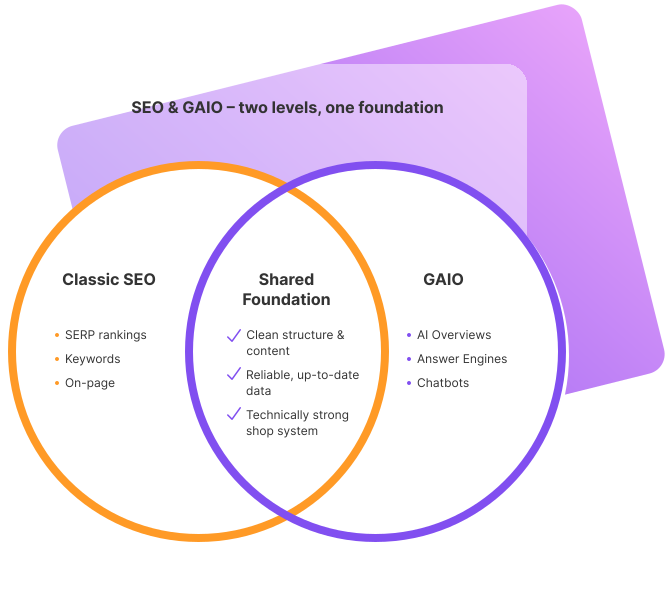
This brings two levels into focus:
The optimal basis for both is formed by a store system that is designed from the outset:
On this page we shed light on:
Fundamental SEO factors in the online store
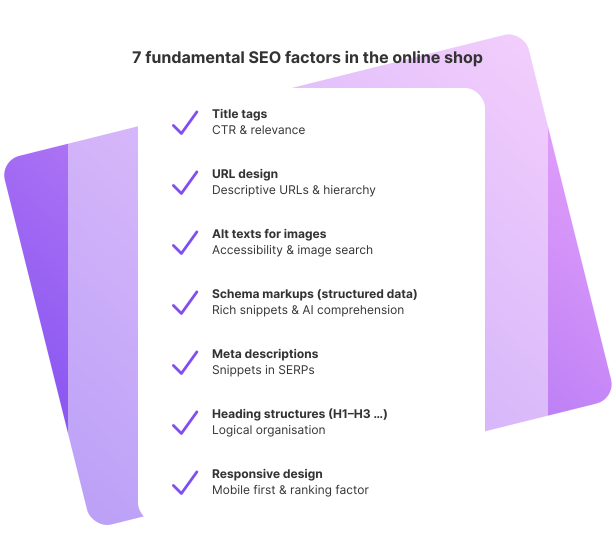
When it comes to on-page optimization, we like to focus on seven central factors. If a store system does not support even one of these points or restricts them too much, this is a strong criterion for exclusion when selecting a system.
Title Tags
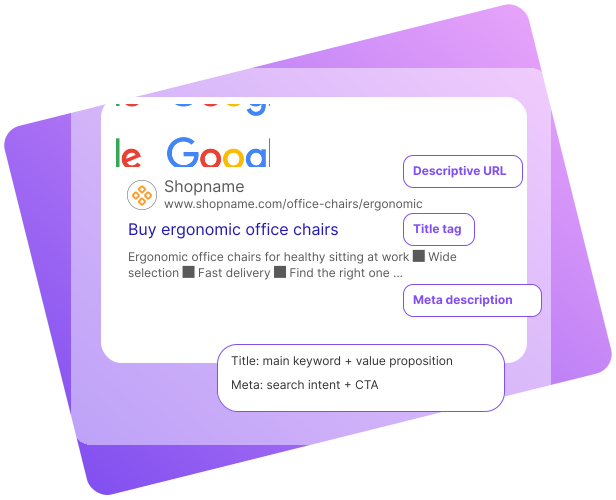
Title tags are displayed in the search results (SERPs) as the title of a page. You should:
A store system should make it possible to assign separate title tags for each page – for the homepage, categories, product pages, guide articles and other content types.
Meta descriptions
Meta descriptions briefly summarize the content of a page and are displayed in the SERPs and in the preview in social media. They should:
The store system should allow convenient maintenance of meta descriptions – ideally with a character display or information on the recommended length.
URL design
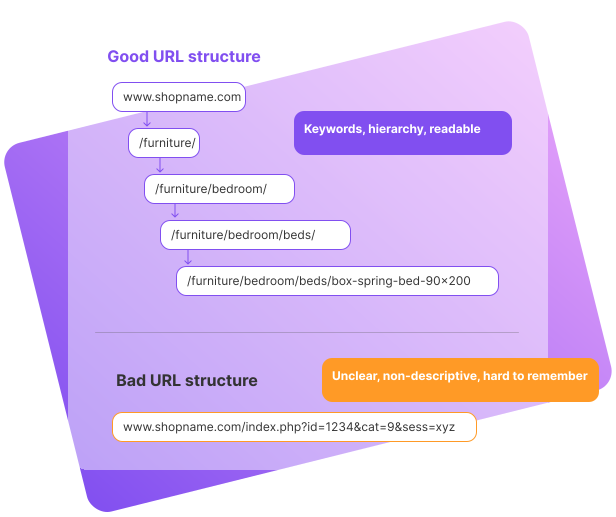
A URL is the unique address of a resource on the web and helps both visitors and search engines to understand the hierarchy and content of a page. Good store systems allow:
Best Practices:
The store system should offer enough design freedom to implement these rules – especially for category structures and product pages.
Headline structures
Optimized headline structures ensure that the content of a page:
A meaningful hierarchy (H1, H2, H3 …) makes it easier for visitors to find relevant sections and helps search engines to recognize topics and subtopics. The store system should therefore:
Alt texts for images
Alt texts describe the content of an image in the HTML code. They are important for:
A store system should offer fields for alt texts as standard – ideally directly in the media or product upload. Sensible alt texts briefly describe the image content and include relevant keywords where appropriate.
Responsiveness for mobile user-friendliness
Responsive design ensures that the online store is easy to use on all devices – from smartphones to desktops. This is now a mandatory criterion for SEO: Google reviews mobile displayability and performance as an important ranking factor.
The important thing is:
A store system should therefore offer mobile-optimized templates and flexible layout options without the need for individual programming for each adaptation.
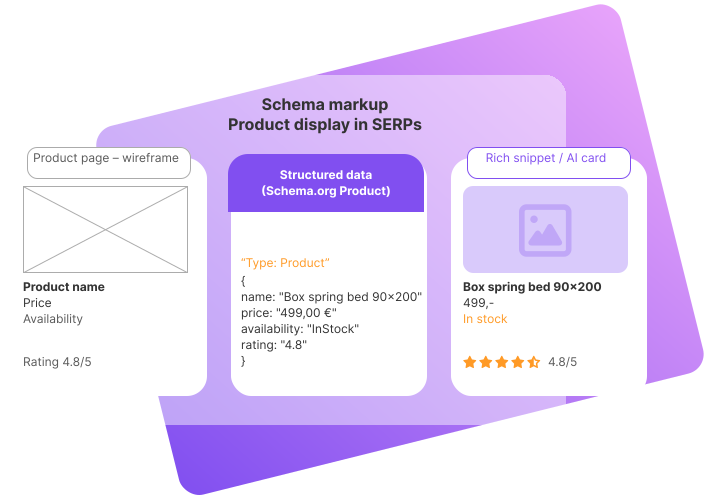
Playout of schema markups
Schema markups (structured data) provide search engines with additional information about the page content – such as products, customer reviews, prices or availability. They form an important basis for:
An SEO-friendly store system should:
Specific SEO functions in store systems
In addition to the basic SEO factors, there are functions that are particularly important for online stores and should be well mapped in the store system.
Support for canonical tags & hreflang
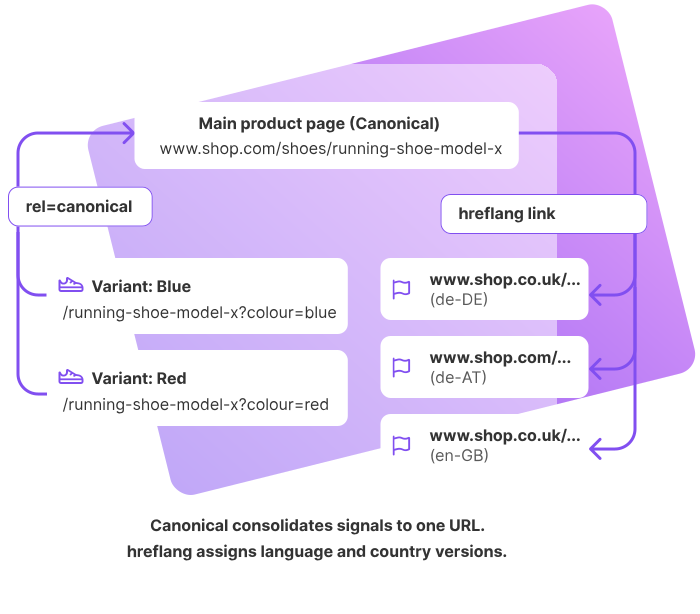
Canonical tags are crucial to avoid duplicate content – a common issue in online stores, e.g:
Canonical URLs show search engines which version of a page should be considered the authoritative original. They are integrated into the page area and bundle signals such as backlinks and internal links to a central URL.
The hreflang tag is added for multilingual or international stores. It informs search engines about this:
Example:
The German URL https://www.beispiel.de/backen/backformen can be linked to the English URL https://www.beispiel.co.uk/baking/baking-pan via hreflang.
A store system should:
Integrated blog function or integration of a CMS
Guide and blog content is an important lever to:
Evergreen content (timeless content) in particular can bring traffic for years without having to be constantly revised.
A store system should therefore:
Clean technical integration is important so that:
Convenient upload and labeling of media content
Product images, videos and other media are central elements in the online store – both for the user experience and for SEO and GAIO.
The store system should enable:
Especially in the context of GAIO, it is important that content is clearly described and structured – not only in the visible text, but also in the metadata.
Statistical evaluation and corresponding interfaces
No meaningful optimization is possible without data. A store system should therefore:
For example:
GAIO:Specific GAIO topics and challenges for online stores
With the advent of generative AI, search has evolved: Users are increasingly receiving direct, AI-generated answers, rather than a list of ten blue links. GAIO – Generative AI Optimization – describes the targeted optimization of content and brands so that generative systems such as ChatGPT, Google AI Overviews, Bing Copilot or Perplexity find, understand and select this content as a source.
For online stores, this means that it is no longer just about being visible in traditional search results, but also about appearing in the answers of AI systems – for questions such as:
What is GAIO and how does it differ from traditional SEO?
SEO aims to prepare content in such a way that it ranks well in the organic results for certain search queries – especially with classic search engines such as Google. The focus includes
GAIO goes one step further: content is designed in such a way that generative systems can:
In addition to classic SEO signals, they play an even greater role:
GAIO does not replace SEO, but builds on a solid SEO foundation.
GAIO in practice: AI overviews, answer engines & chatbots
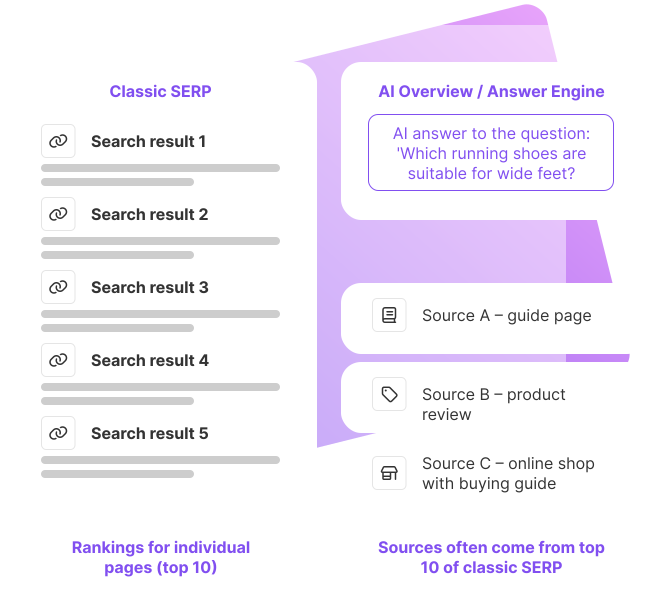
Google AI Overviews (also known as AI Overviews / AI Snapshots) are a central GAIO playing field. Here, Google summarizes content from various sources for a search query in a compact text and usually displays the sources as clickable tiles.
Other examples of “answer engines” are:
There are two sides to this for website operators:
Studies show that the majority of sources cited in AI Overviews come from the top 10 search results. This underlines the fact that GAIO is hardly possible without a clean SEO foundation.
Content strategy for GAIO in eCommerce
For online stores, GAIO means one thing above all: content should be structured and formulated in such a way that it answers specific user questions completely and comprehensibly. Important principles:
Question-driven content
Topic clusters & guidebook worlds
E-E-A-T & trust signals
Strengthen product-specific content
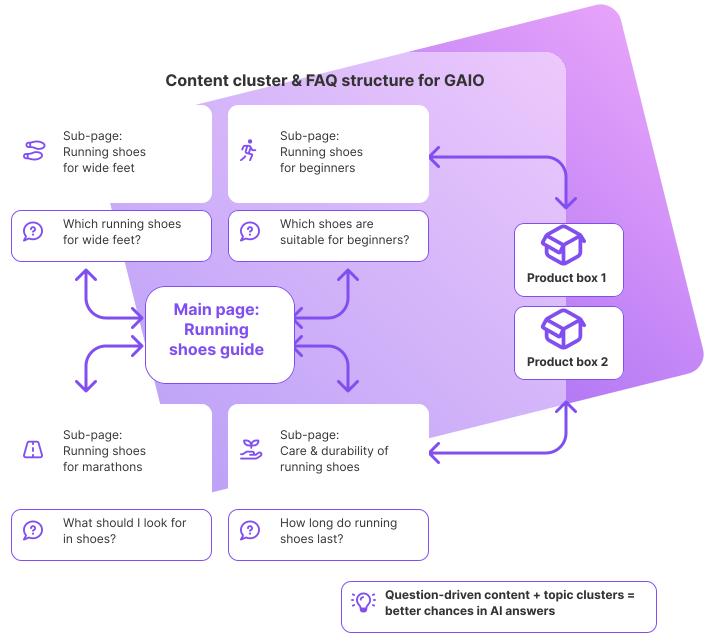
The better content covers user questions and is prepared in a structured way, the greater the chance of appearing in generative answers.
Store system & data structure requirements for GAIO
GAIO is not just a question of content, but also a question of data structure. It is helpful for generative AI systems if information:
are available. This is where the store system comes into play. Important points:
Structured data (Schema.org)
Clean data models & unique entities
Technical accessibility
Internationalization & multilingualism
A store system that offers flexibility and transparency here creates a better basis for search engines and AI systems to interpret content correctly.
GAIO as a supplement to SEO - what retailers should do
For retailers, the interaction of SEO and GAIO means:
1. secure SEO basics
2. adapt content strategy
3. make full use of store system functions
4. observe visibility in AI features
GAIO is therefore not a replacement, but a further development of classic SEO – particularly relevant in a world in which more and more answers are coming from AI systems.
Technical aspects in the operation of store systems
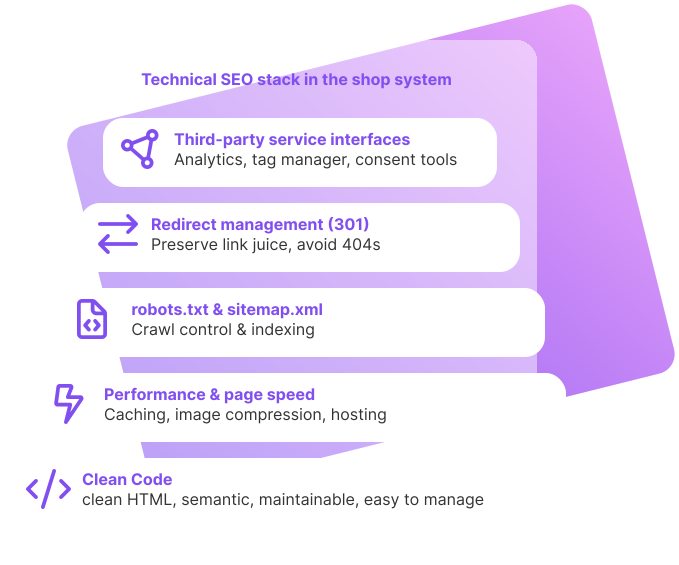
In the background of an online store, there are several technical aspects that have a strong impact on SEO and GAIO friendliness and should be taken into account during setup.
Functional tool for redirect management
“404 – Page not found” is one of the quickest ways to lose visitors. A store system should therefore offer reliable redirect management. Important:
Permanent 301 redirects not only redirect users but also search engines cleanly and transfer a large part of the existing “link juice” to the new URL. This means that the previously established authority is largely retained.
Access and control of robots.txt and sitemap.xml
An SEO-friendly store system should have access to:
Ideally can:
Performance and loading speed
Online shopping thrives on speed and convenience. Slow pages:
Technical SEO therefore always includes optimizing page loading speed and ensuring stable performance – even with a growing product range and increasing traffic. Important points:
The store system should enable corresponding settings in the back end and be scalable.
Clean Code
Search engines prefer valid, clean HTML code. This makes it easier:
Clean code also contributes indirectly:
with. The store system should:
Clean code is not automatically secure code, but it forms the basis for security and expandability.
Interfaces to third-party services
Not every store system comes with all functions as standard. This makes it all the more important to be able to integrate third-party services, for example:
The decisive factor is that this integration:
User-friendliness, UX & SEO signals in the online store
An SEO and GAIO-friendly store system has a direct impact on user-friendliness – and vice versa: Good user experience has a positive effect on important SEO signals such as dwell time, bounce rate and conversion rate. These user signals are included in the customer review by search engines and thus influence how relevant an online store is rated for certain search queries.
A clearly structured, user-oriented experience is also an advantage for generative AI systems: content that is clearly structured, logically linked and comprehensively answered is easier to interpret as a reliable source. User-friendliness is therefore a common denominator of classic SEO, GAIO and conversion optimization.
User experience as a ranking factor in eCommerce
Clarity, clarity, intuitive user guidance and efficient paths to the goal are central factors for a positive user experience in the online store. These include, for example:
Such UX aspects:
They therefore provide signals that search engines and AI systems interpret as an indication of relevance and quality. A store system should therefore provide all the necessary functions to implement UX optimizations without major development effort – from the search configuration to the design of the checkout flow.
Information architecture & internal linking in the store
A well thought-out page and information architecture:
A clear architecture helps search engines to recognize subject areas and connections. Good internal linking reinforces this structure, directs link power to strategically important pages (e.g. categories, guides, top sellers) and helps to define topic clusters.
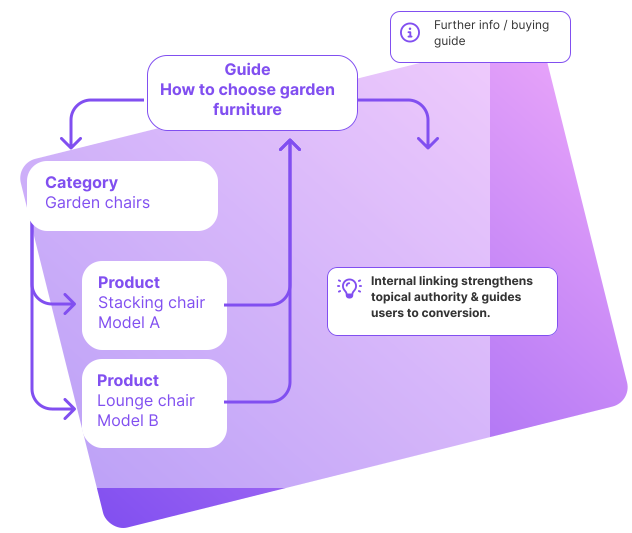
A clean information architecture is the basis for retailers to:
An effective store system should offer maximum design freedom here – for example with:
This creates a page structure that is optimally usable for users as well as for SEO and GAIO.
Conclusion: Use SEO & GAIO potential with the right store system
If you want to sell successfully with an online store in the long term, there is no getting around SEO and GAIO. Both disciplines begin with the selection of a suitable store system that:
From the seven basic SEO factors to specific store system functions and technical aspects through to user-friendliness, it is clear that many factors are interlinked. A consistently implemented SEO strategy that is supplemented by GAIO perspectives can make the decisive difference in competition.
The better a store system supports retailers in optimizing content and structures, the easier it is to build pages that: