The hammer hangs there! Developer interview on JTL Plan&Produce
With the release of JTL-Wawi 1.7, we also published our production solution JTL-Plan&Produce. We were able to give you an overview of the most important features, advantages and core functions, but with such a complex solution, it quickly became clear that not everything has been said yet! That’s why we grabbed the responsible Product Owner Marc to talk to him about the highlights of JTL Plan&Produce. In the interview, he also gives us a look behind the scenes of development.
Hi Marc, surely you and your team are now proud that you are also “stable” with the stable release?
Definitely! After all, we have been working on the solution for three years and have now reached a major milestone. The result is really impressive. Good feedback has been received from many customers.
JTL-Plan&Produce has been specially developed for retailers who work in production and manufacturing. The solution enables them to plan and carry out all the processes required for the production and finishing of goods. It consists of the “Production” module in JTL-Wawi and the external assistance system JTL-Workbench.
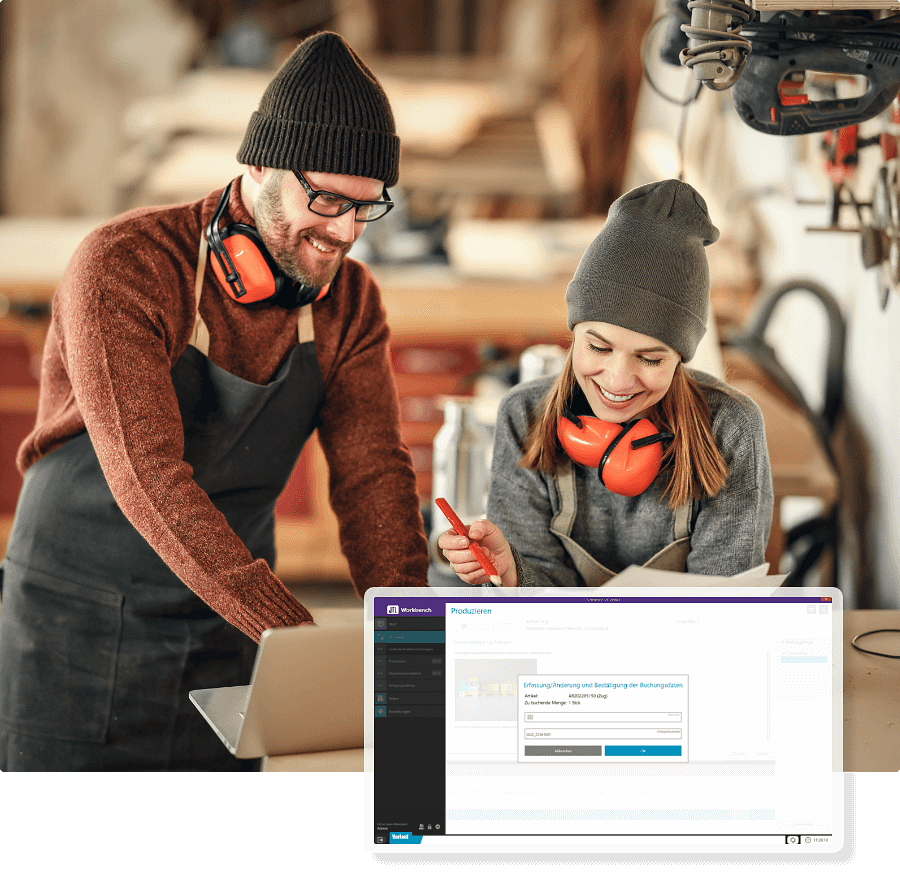
While JTL-Plan&Produce is used to determine and define all the necessary production steps, JTL-Workbench is a “helper at the workbench”. Instructions, visual aids or other important production information previously created in JTL Plan&Produce are displayed to production employees during production by JTL Workbench. The look and feel of the assistance system is similar to our warehouse solution JTL-WMS. It is specially designed for work in production facilities, where operation often has to be fast.
What types of production are possible with the production tool?
With the JTL Workbench assistance system, we offer three different types of production that are suitable for both series and individual production. The first type of production is ad-hoc production, in which production takes place without pre-planning and production steps, quantities or batch sizes are defined directly during “working”.
The second type of manufacturing is MRP production, in which the exact quantity required is produced. For example, if you know exactly how many T-shirts will be sold in a season, you can pre-produce them perfectly.
The third type of production is sales-order-related production, which is ideal when a specific item needs to be finished at a precise time. All aspects of production are pre-planned in this process and are determined by data from the respective production order.
What is special about the solution?
I don’t know of any production tool on the market that is as flexible and scalable. From a small spice manufacturer to a car factory, JTL Plan&Produce can be used by anyone. If a company grows quickly, there’s no need to start looking for a new Application right away.
The fact that the solution is a module within JTL-Wawi also offers retailers the advantage of not losing sight of other processes in their day-to-day business, such as purchasing and sales or warehousing and shipping, in addition to manufacturing processes. With JTL-Wawi as their “control center”, they have a holistic view of their trade.
How did the project start?
The idea for JTL Plan&Produce arose from a question that at first glance doesn’t seem to have much to do with production: How can retailers remain competitive when price pressure is increasing due to ever more global structures? One answer for us was: by offering individual and high-quality goods through in-house production, which sets them apart from the competition. We then took this idea further and asked what contribution we as software developers could make to support our customers here.
What hurdles did you have to overcome during development?
We wanted to develop a tool that could be used to produce a wide range of items. After all, our users come from a wide variety of industries. Of course, a company that produces bread, for example, has completely different requirements to one that prints T-shirts. Nevertheless, we had to accommodate both in one piece of software.
How did you approach this challenge?
The close cooperation with our pilot customers helped us a lot here. Fortunately, we were able to maintain a close exchange with them and test JTL Plan&Produce in practice at a very early stage in order to find out what works and what does not. How do you deal with BBD and batch items? What differences are there between series and individual production? Although we had already answered all these questions in theory, we were only able to find the real solutions through the experience gained from the practical tests. We are very grateful to our pilot customers for this!
In the past, we often received customer inquiries from manufacturing and finishing companies who wanted to map their production in JTL-Wawi. We had to look for complex workarounds for such processes. This is now different with JTL Plan&Produce.
Which feature are you particularly proud of?
We have invested a lot of work in the touch-optimized user interface, but it has really paid off. It makes production work with the assistance tool a breeze.
In my opinion, the handling of BBD and batch production is also very successful. We had to ensure that it was always possible to draw conclusions about the items used and the associated supplier orders from the resulting product. That’s why we developed special dialogs that ask whether the product to be produced should be given a BBD or batch as soon as one of the items used in the bill of materials contains this information.
There are also practical warehouse functions in JTL Workbench
No production facility works without a warehouse. Please explain briefly how warehouse processes are mapped in JTL Plan&Produce.
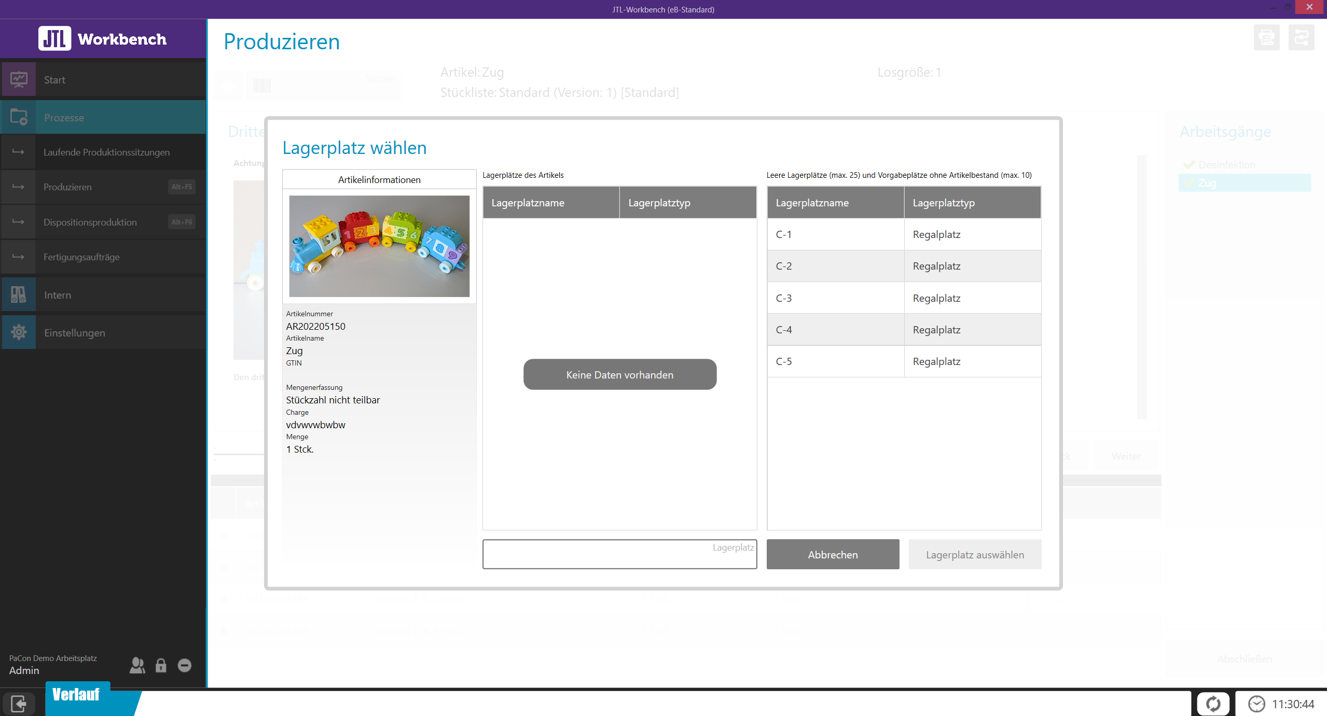
Warehouse and production are logically closely linked in every manufacturing or finishing company. That’s why JTL Workbench has a storage bin overview, for example, so that you can see where things are at any time.
Retailers who use our JTL-WMS warehouse solution benefit from particularly smart features. For example, they can use the replenishment order to order production materials directly via JTL-Workbench if they notice that stock is running low. With EAN128 bar code scans, production employees can also quickly find out where the storage location of a particular item is.
The visual code editor Blockly
What do you plan to do next with JTL Plan&Produce?
Next, we will focus on the customizability of the software. We want to ensure that our users have the opportunity to expand the software according to their requirements. The intensive collaboration with our pilot customers has shown that, at the end of the day, every “workbench” is different. Our JTL service partners should therefore be able to provide new functions through plugins, similar to our shop system JTL-Shop. They should also be able to qualify for the relevant certification with a training program.
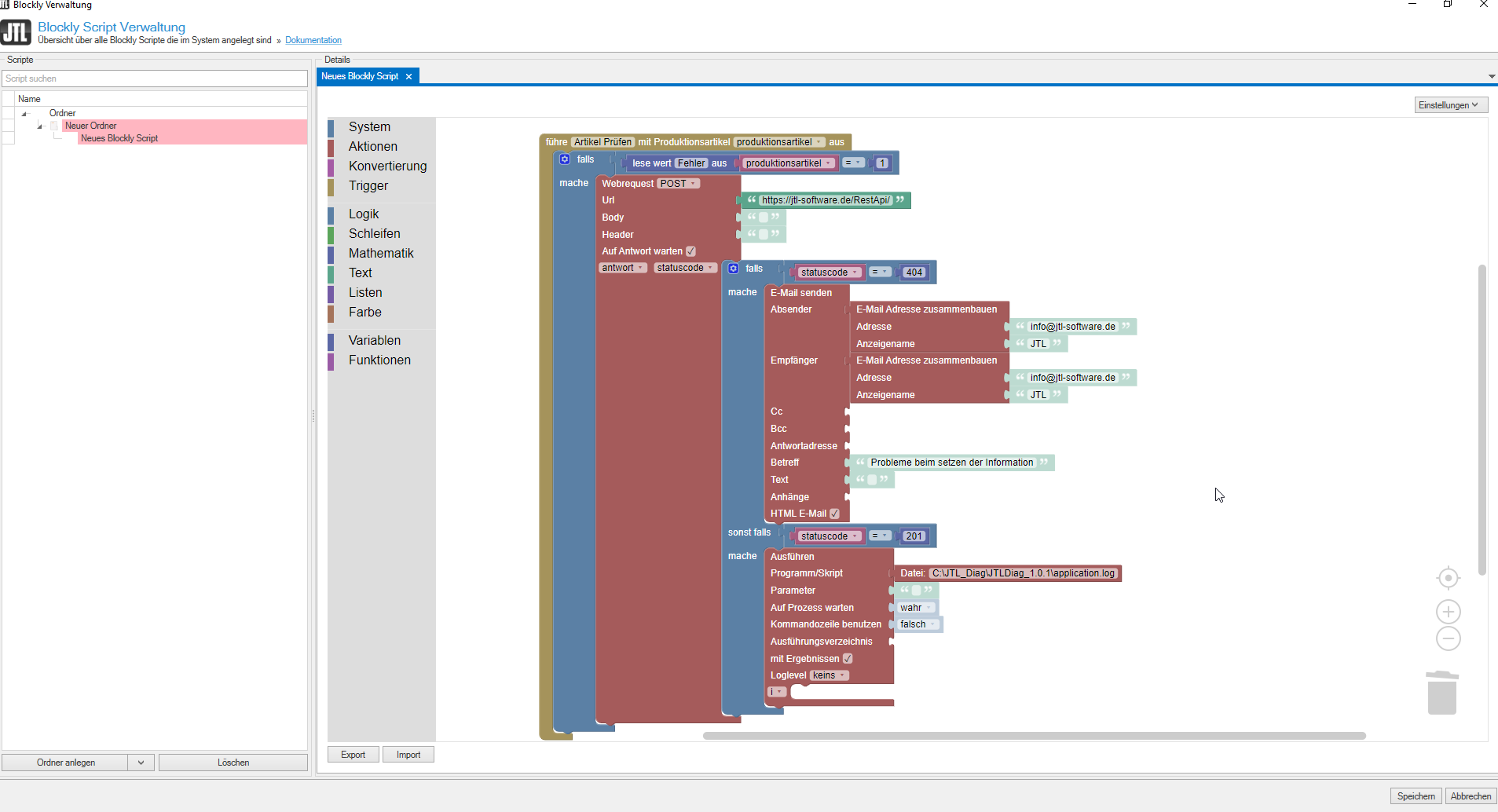
Automation also remains a major topic. We will be working on implementing Blockly, a visual code editor. It makes it possible to trigger automation processes in JTL Workbench without programming knowledge.
You really have a lot of plans! Then get to work and thank you very much for the interview Marc.
Webinar tip
Would you like to learn more about the possible uses of JTL Plan&Produce or do you have specific questions about the production tool? Then look forward to our webinar on 18.04.23 from 15:00 to 16:00 with Product Owner Marc Völker. Among other things, he will give you an introduction to the basic functionalities and reveal what to look out for when producing MHD items.