Successful eCommerce -
6 advantages of an online store
In recent years, eCommerce has developed from an additional option to a fully-fledged sales channel. Customers gather information online, compare listings and expect to be able to buy products at any time and from anywhere.
For retailers, the question is therefore not so much whether they should sell online, but how to do so strategically – and on what technical basis.
Many companies today start out on marketplaces to build up their reach and gain initial experience. However, when it comes to margins, brand development and long-term customer relationships, the company’s own online store comes into focus. It becomes the control center of digital commerce: all the threads come together here – from the product range to content, marketing and service through to process handling in the background.
The decision to set up your own store is therefore much more than a technical question. It affects central business objectives:
Should the brand be strengthened, should margins be optimized, should customers be better understood and retained in the long term? What freedom do retailers want in terms of product range, prices, service and public image?
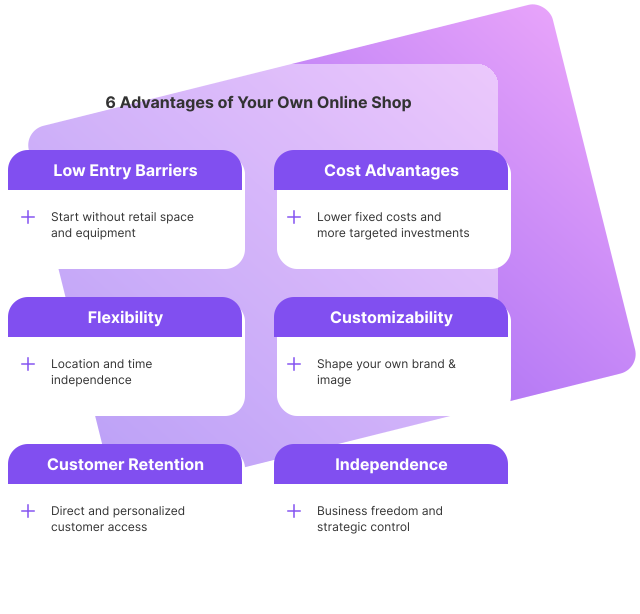
On this page, we highlight six key advantages of having your own online store:
The following chapters show what these advantages look like in practice – and why having your own online store is an important component of your eCommerce strategy for many companies.
Low entry hurdles - your own online store in eCommerce
Getting started in online retail has never been as accessible as it is today. Modern store systems and platforms relieve retailers of much of the technical complexity. What used to involve considerable IT effort can now often be implemented in just a few steps.
This means that having your own online store is no longer reserved for large eCommerce players, but is also a realistic option for small and medium-sized companies – whether as a supplement to a brick-and-mortar store or as a fully digital business model.
Technical barriers to entry compared to brick-and-mortar retail
Retailers no longer need to be tech gurus to realize their dream of having their own digital shop window. Modern store systems overcome many technical hurdles that used to require a great deal of effort to overcome.
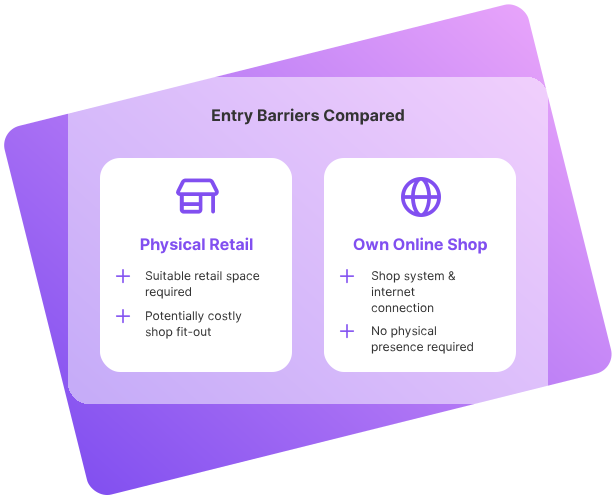
Compared to brick-and-mortar retail, numerous barriers to entry are eliminated:
Instead, a combination of a store system, internet connection and basic commercial knowledge is all you need to get started. The technical basis today:
Many platforms also take care of issues such as hosting, security updates and basic configuration. This allows retailers to focus more on content, products and processes instead of first setting up a complex IT infrastructure.
Start and grow step by step
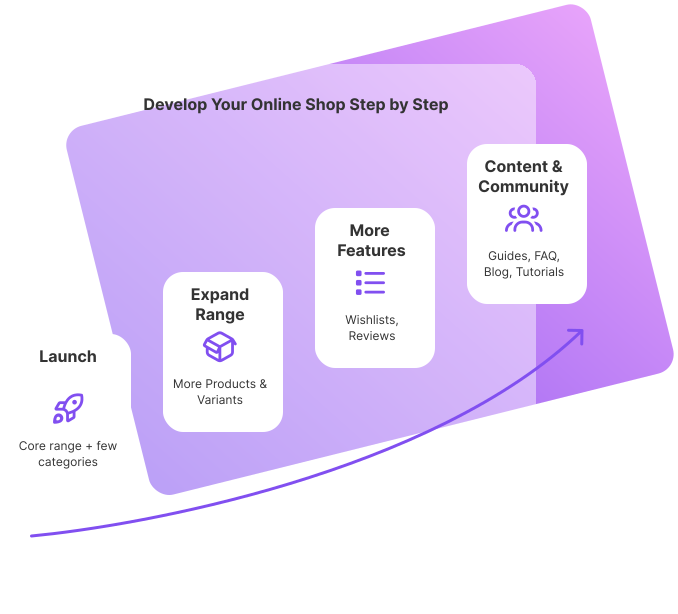
Another advantage: an online store does not have to be “perfect” right from the start. Retailers can start with a manageable product range, gain initial experience and gradually develop the store further.
Typical steps are
Supplementary support:
The result is an eCommerce setup that is no longer reserved exclusively for large companies, but also enables small and medium-sized businesses to get started. It has rarely been as easy as it is today to make your own listings accessible to a wide range of buyers.
Cost benefits of an online store - save, grow, profit
Having your own online store not only offers strategic advantages, but also tangible economic benefits. Costs can be optimized and budgets used in a more targeted manner, both in comparison to brick-and-mortar retail and to pure marketplace sales.
Lower fixed costs and flexible cost models
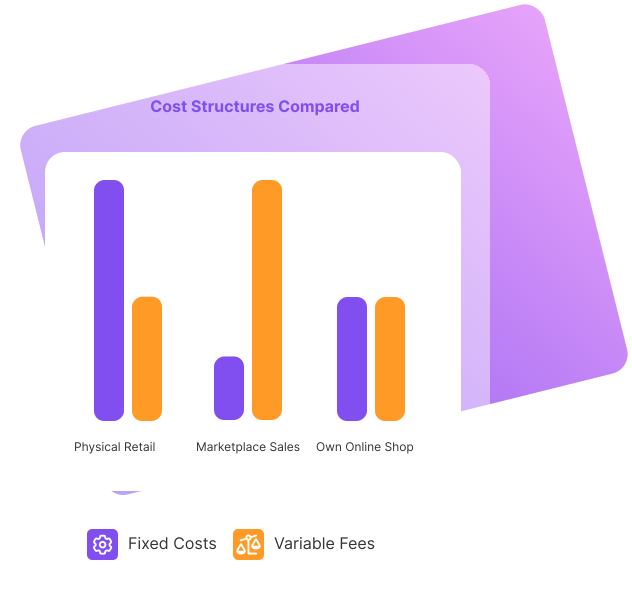
A key advantage of an online store is the often lower fixed costs compared to bricks-and-mortar retail. Items such as store rent, store fitting, ancillary costs and permanent presence times are eliminated or significantly reduced.
Instead, the main result is:
Compared to store rents in good city center locations or shopping centers, these costs are often much more calculable and scalable. What’s more, retailers can choose a cost model that suits their situation – from affordable entry-level packages to high-performance systems for high-growth stores.
Those who previously sold exclusively via marketplaces also benefit from the fact that:
Efficient processes & lean warehousing
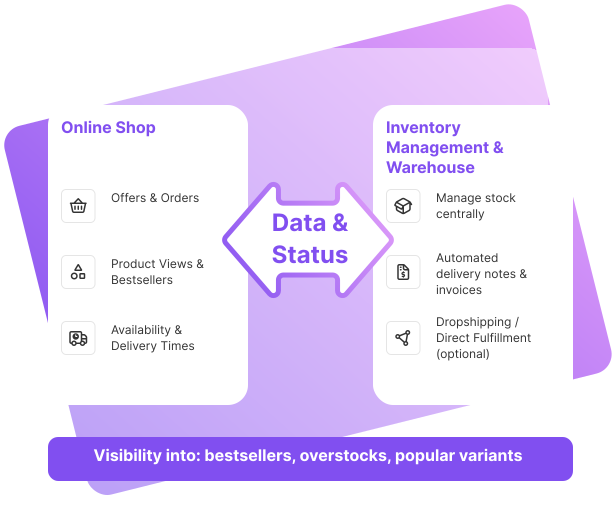
An online store creates the conditions for more efficient processes in warehousing and logistics. In conjunction with a connected merchandise management system:
Concepts such as drop shipping or drop shipments can help to reduce warehousing costs by shipping goods only after the customer has ordered them from the supplier. This can be a great advantage for certain product ranges or business ideas in order to avoid tying up capital in the warehouse.
Of course, drop shipping is not suitable for every business model. But even without this model, inventories can be optimized through targeted monitoring and analysis. The online store provides valuable information on this:
This transparency is often more difficult to achieve in stationary retail, especially if there are several branches or points of sale.
Using data to target marketing budgets
Another cost advantage results from the improved controllability of marketing measures. In online retail, retailers can measure very precisely which campaigns, channels and content lead to sales.
Store systems and analysis tools offer insights into, among other things:
Retailers can adjust budgets in real time, compare campaigns and invest in targeted measures that are demonstrably worthwhile. At the same time, wastage can be reduced because target groups can be defined and addressed very precisely.
Compared to classic offline campaigns such as poster advertising or print ads, this is a decisive advantage: while success can only be roughly estimated in these cases, the online store provides concrete figures for decisions – and thus a better basis for economically sensible growth.
Flexibility - own store, own rules
Having your own online store means a high degree of flexibility – both in terms of working methods and organization as well as in terms of product range, business models and growth. Retailers are less rigidly bound to store opening hours, store locations or marketplace requirements.
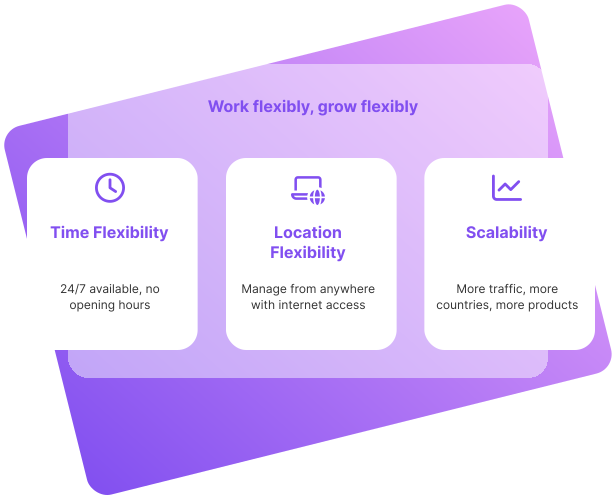
Flexibility in terms of time and location in online retailAn outstanding advantage of digital commerce in your own webshop is the flexibility – for both retailers and customers.
In terms of time
An online store has no opening hours. Customers can shop around the clock, regardless of the day of the week or time of day. Retailers do not have to be present in person to generate sales.
Spatial
The online business can be managed from almost anywhere in the world. Whether in the office, warehouse, home office or on the move – with Internet access and the right tools, orders can be monitored, customer inquiries answered and product ranges adjusted.
For many retailers, this opens up new scope for organizing their day-to-day work. Work and private life can often be reconciled more flexibly than would be possible in a purely stationary business model.
In their own store, retailers decide for themselves which products they offer, how they structure their product range and which business models they pursue. Possible variants are, for example:
New products can be added easily, test ranges can be introduced and removed again if required. Adjustments to trends, seasonality or current events can be implemented at short notice – without lengthy coordination with external platform operators or landlords.
An online store also offers high scalability. Depending on the selected store system and IT setup, the system can be gradually adapted to meet increasing requirements:
Seasonal business – for example in fashion retail, the gift sector or seasonal promotions – can also be better managed. Campaigns can be planned in a targeted manner, landing pages can be prepared and product ranges can be shifted for a limited period of time.
While brick-and-mortar stores are often tied to fixed store spaces and staffing limits, an online store can react more flexibly to peak times – for example by providing additional shipping capacity or temporary customer service support.
Individualizability - showcase your own brand in the store
An online store is not just a technical sales platform, but also a stage for the brand image. Retailers can influence the way they present themselves to a much greater extent than on marketplaces or in standardized store concepts.
Targeted control of brand presence and design
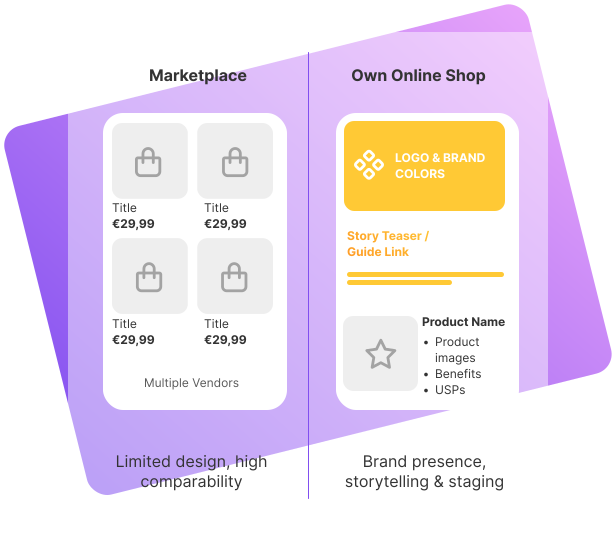
In many city centers, the store concepts of large chains are very similar. Even in marketplaces, products from different suppliers merge into a seemingly homogeneous listing. It’s different in your own online store: Here, the entire brand presence can be consciously designed.
These include:
The selected store system and the design concept form the stage on which the brand can unfold. Instead of just “swimming along”, retailers can establish a clear identity and show their profile in relation to competitors.
Storytelling, content & product staging
Your own online store is more than just a product list. It offers space for storytelling and content that complements the mere listing of items:
Such content strengthens the perception of competence, provides added value and supports customers in making the right decisions for them – especially for products that require explanation.
In contrast to marketplaces, where content is highly structured and regulated, retailers have far more freedom to showcase products in their own store. Ideally, this will have a positive effect on:
Customer loyalty via online store - the personal connection to the target group
Having your own online store is the direct link to your target group. Unlike pure marketplace sales, retailers have more control over contact with their customers – and can build long-term relationships.
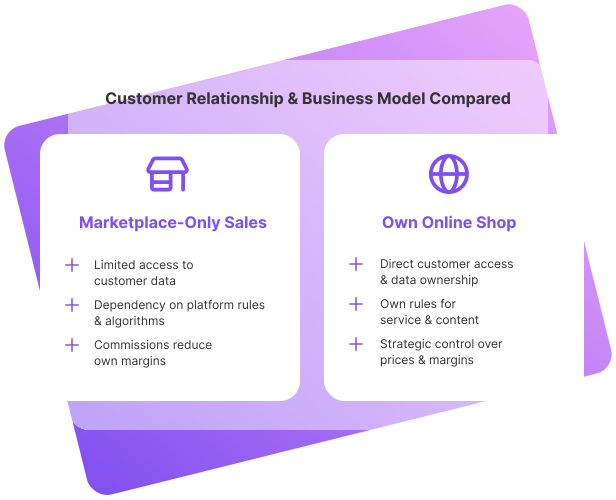
Direct customer access and data sovereigntyAnyone who sells exclusively via marketplaces knows the problem: access to customer data is usually severely restricted. Communication takes place via platform mechanisms, newsletters are often not permitted and detailed data on user behavior remains with the platform operator.
The situation is different in your own online store. Here, retailers have significantly more information at their disposal – within the framework of the applicable data protection regulations:
This data forms the basis for targeted customer loyalty – always provided that consent (e.g. for newsletters) is obtained correctly and legal requirements are complied with.
Personalization, Loyalty & CommunityHaving your own store enables a wide range of customer loyalty measures:
Even small gestures can make a big difference: a personal thank you card in the package, a small surprise for regular customers or particularly careful packaging. All of this can be better managed in your own store than on standardized platforms.
In the long term, a community can develop around the brand – for example via:
The company’s own store is the central point of contact to which all activities lead.
Customer feedback is not only an indicator of satisfaction, but also a valuable source of improvement. Retailers can use their own store:
Critical feedback helps to identify weaknesses in the product range, presentation or service and to rectify them in a targeted manner. Positive customer reviews can be used as confidence-building elements – both in the store itself and in marketing measures.
Direct dialog with the target group strengthens trust and sends a signal: The customer’s needs are taken seriously.
Independence with your own online store - use your business freedom
In addition to all the functional and economic aspects, another advantage plays a major role: entrepreneurial independence. Having their own online store allows retailers to largely control their own business model instead of being highly dependent on platform operators.
Less dependence on platform rules and algorithms
Last but not least, entrepreneurial independence is one of the biggest advantages of having your own online store for many retailers. Those who sell exclusively on marketplaces are highly dependent on:
In your own store, the rules of the retailer apply – within the framework of legal requirements, of course. Changes to terms and conditions, fee structures or presentation requirements of external platforms do not directly affect the core of the business. Your own online store becomes a robust basis that remains in place even if the framework conditions on marketplaces change.
Strategic control over prices, margins & product range
With their own store, retailers have significantly more leeway when it comes to pricing. While there is often intense price competition on marketplaces and the Buy Box wins through low prices, you can pursue a differentiated strategy in your own store:
The margin can be controlled in a more targeted manner because no or significantly lower platform commissions are incurred. The fees saved can be invested in service, marketing or product quality – and in turn increase competitiveness.
Independence and greater control over your own business model make a significant contribution to increasing motivation and building up the digital business in the long term.
Start your online store - the new sellers in eCommerce
Opening your own online store offers a wide range of prospects – from cost benefits and flexibility to brand building, customer loyalty and entrepreneurial independence. However, a solid foundation is needed to turn this potential into a successful eCommerce business.
We have compiled numerous tips and assistance in our store system guide. Retailers will find, among other things:
If you want to make targeted use of the advantages of your own online store, you should take the next step and start choosing a suitable system. This will turn the idea of your own online store into a viable, future-oriented eCommerce business model.