The switch to e-invoicing is an important step that not only makes companies legally compliant, but also brings efficiency and transparency to accounting processes. In the first part of our three-part blog series, we have already taken you through the legal foundations of e-invoicing. To ensure a smooth transition, a structured approach is essential. In this article, we explain how you can adapt your invoicing processes, which formats are permitted and which solution can help you with all of this.
Analysis of current invoicing processes: Where do you stand?
The first step towards switching to e-invoicing is to determine the status quo of your current invoicing processes. Many companies still use manual or paper-based systems that are not suitable for the new requirements. Answer the following questions to assess your current situation:
- How do you currently issue invoices?
Do you use paper, PDF or Excel spreadsheets? - How do you receive invoices from business partners?
Are invoices recorded manually or are there already digital processes in place? - Do you use accounting software?
Is your accounting software able to process e-invoices or are adjustments required?
Create an overview of your existing systems, workflows and interfaces with your business partners. Such an inventory helps to identify weak points and plan the necessary steps for the changeover.
Which formats are permitted? XRechnung, ZUGFeRD and co.
The e-invoice is created in standardized formats that are machine-readable and structured. Two of the best-known formats are the XRechnung and the ZUGFeRD format. Both meet the requirements of EU DIN standard 16931, but have different areas of application.
- XRechnung
This format is a purely machine-readable XML data set and is primarily prescribed for invoices to public clients (B2G). It is ideal for fully automated processes, but requires special software for display. - ZUGFeRD
ZUGFeRD combines a standard or human-readable PDF with embedded XML data for machine processing. It is particularly suitable for companies that use both manual and automated processes. ZUGFeRD is more flexible and is often used in the B2B sector.
There is also the EDI procedure (Electronic Data Interchange), although the admissibility of this is still unclear as it does not currently comply with the European standard. Although a legally compliant way of using the procedure is being worked on, it is not yet clear when this will be available.
Software solution for e-invoices: JERA
Choosing the right software is a crucial step in the transition to e-invoicing. Our specialist for digital accounting, JERA from the JTL Group, offers the E-Rechnung 2 FIBU solution, a powerful tool that has been specially developed for the needs of online merchants. This software supports you with:
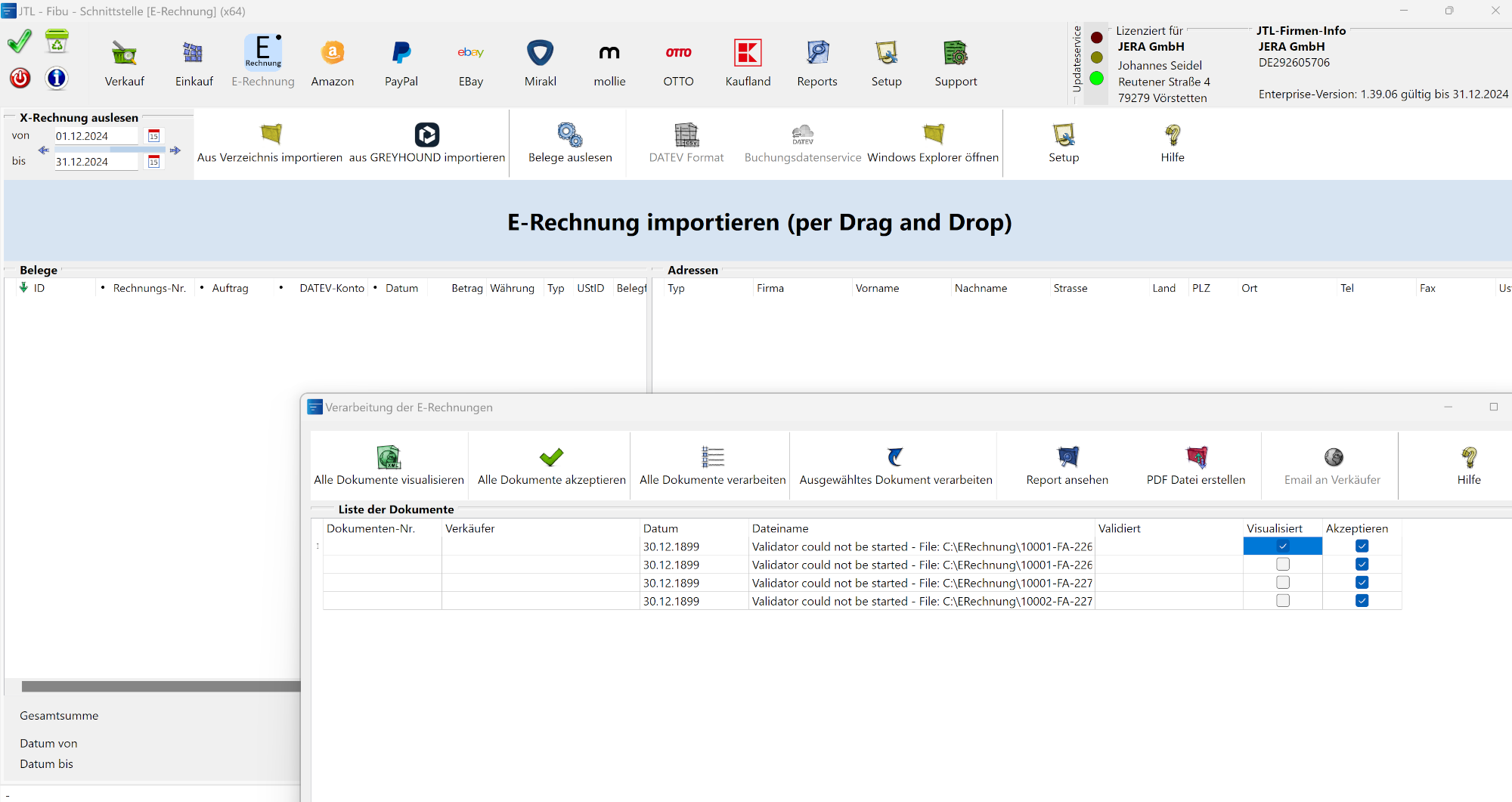
Using JERA not only saves time, but also ensures that your company meets the legal requirements. You can find out more about the functions and benefits on our information page on the e-invoicing obligation from 2025.
Employee training and communication with business partners
Technical solutions are only one part of the changeover. It is just as important to involve your employees and business partners in the process.
Employee training
- Familiarize your employees with the new software and the legal requirements.
- Creates guides and FAQs to clarify frequently asked questions.
- Keep up to date (e.g. on the website of the responsible federal ministry) and provide the team with regular updates when legal requirements change.
Communication with business partners
- Inform your partners early on about the switch to e-billing.
- Clarifies which format is preferred and which technical requirements must be met.
- Encourage your business partners to also switch to e-invoices to harmonize processes
Open and clear communication minimizes misunderstandings and ensures that the changeover runs smoothly on both sides.
E-invoicing: Use the obligation as an opportunity for optimization!
Switching to e-invoicing requires planning and commitment, but offers enormous benefits: Efficiency, sustainability and tax transparency. With a step-by-step analysis of your processes, the choice of the right format and a reliable software solution like JERA, you can make the transition with ease. Make sure your employees and partners are involved and benefit from the possibilities of digital accounting.
All posts in the blog series on mandatory e-invoicing at a glance:
Part 1: Mandatory e-invoicing 2025: Everything online retailers need to know
Part 3: Expert tips: The e-invoice with JERA and GREYHOUND