
What does the ideal shopping experience of the future look like? The answer is clear: omnichannel! This is documented by the results of the Google Omnichannel Excellence Study (GOES) from 2022, whose highlighted potential for the German market is still relevant in 2024. The study sheds light on the expectation gap between what your customers want and what retailers currently offer them. But we are looking beyond the horizon: in this article, we not only reveal the most exciting developments in the omnichannel sector, but also shed light on four other trends that will be groundbreaking in eCommerce in 2024.
If you would also like to stay informed about all the latest developments in the JTL product forge, you should definitely subscribe to our newsletter:
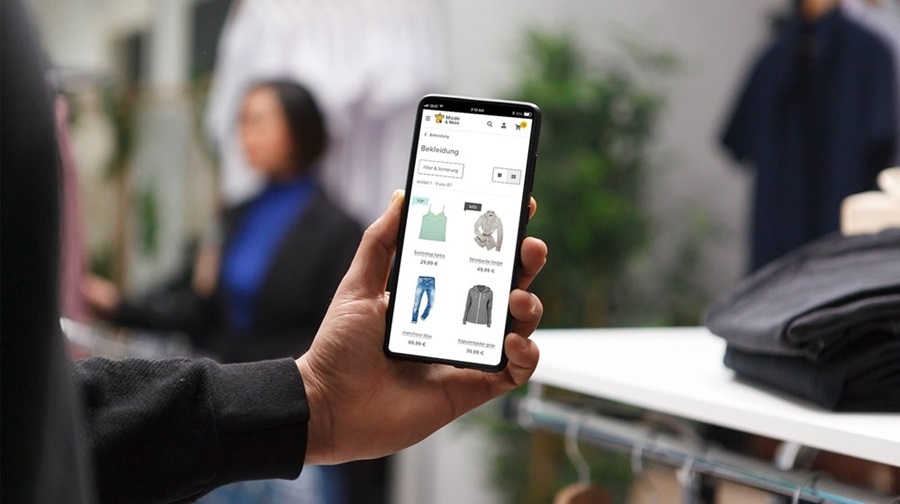
1. omnichannel is king, but not yet on the throne in Germany
If you want to sell successfully in 2024, you have to address your customers holistically via different channels. So much for the theory. Models such as Click & Collect or the return of online orders to the store have long since sealed the fusion of digital and brick-and-mortar retail and made it the standard.

However, the Google study mentioned above reveals gaps in expectations that need to be closed in the future in order to reduce potential frustration and make shopping an all-round positive experience for your customers. It names three approaches that will improve your omnichannel listing:
System networking within the JTL product portfolio effectively supports you in achieving your omnichannel goals. The seamless interaction of JTL-Wawi, JTL-eazyAuction, JTL-Shop and JTL-POS not only automates your sales in day-to-day business, but also sets the course for an excellent shopping experience. Warehouse and shipping solutions such as JTL-WMS and JTL-Shipping speed up order processing, but also provide important information such as availability, delivery time and status, making shopping and ordering more convenient for your customers.
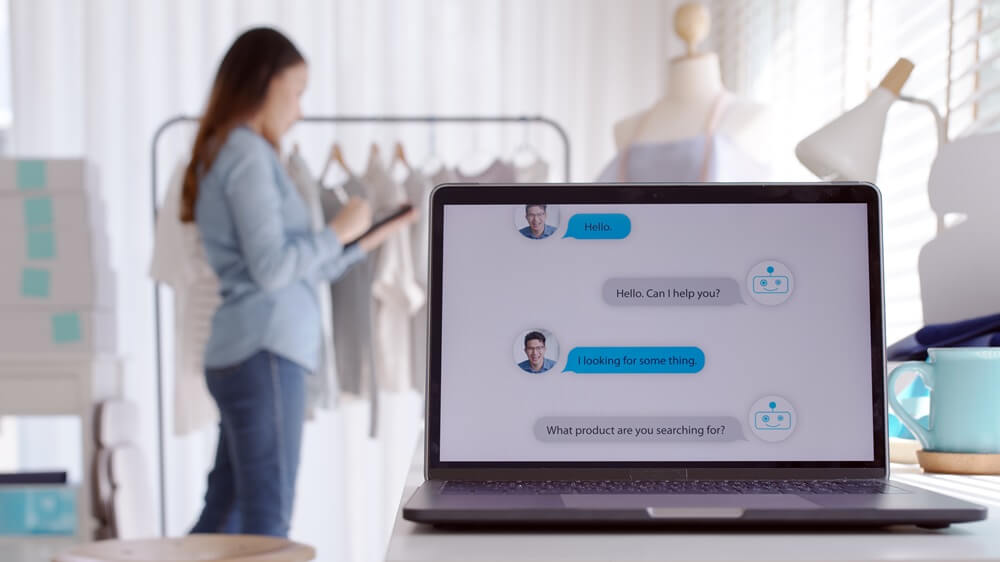
2. artificial intelligence is also making waves in eCommerce
In addition to the much-cited ChatGPT from OpenAI, there are now hundreds of AI tools that help companies and organizations to automate processes, analyse data, predict trends and many other tasks. Artificial intelligence is also making rapid progress in eCommerce, which you as a retailer can use for your sales success.
The opportunities for online business are diverse. They range from intelligent chatbots for processing customer inquiries to personalized customer journeys and process optimization in warehouse logistics. Returns management in particular could be used in the future with the help of AI for better allocation of returned goods on the secondary market, for spare parts recovery or recycling.
We at JTL are also putting our heads together with our technology partners to make our products even more efficient and customized through the integration of AI. A first step will be the automatic text generation of item descriptions and translations directly in JTL-Wawi. We will of course keep you up to date on all updates here in the JTL blog.

3. self-service supports informed purchasing decisions
When buying online, customers often lack a helpful consultation to help them make a purchase decision. This can be remedied by virtual tools that replace a personal consultation in the online sector and stimulate business as digital assistants.
An online provider for interior design could, for example, provide interested store visitors with a wallpaper calculator that calculates exactly how many rolls of wallpaper are needed for a home project after entering the wall dimensions; virtual color and style advice for your own four walls is also conceivable. Another practical example can already be found in the online stores of some bicycle dealers, where potential buyers are recommended the right frame size for their new bike based on a short questionnaire about their body measurements and riding style.
Self-service tools will certainly pick up speed in 2024 and provide customers with a new shopping experience that can make purchasing decisions easier, especially in the high-priced product segment, and clearly set your own online store apart from the competition.

4. social commerce: teleshopping reloaded
In the coming year, shopping options via social media channels such as TikTok or Instagram will continue to gain in importance. According to management consultants Accenture, the market volume of social commerce will grow to 1.2 billion US dollars worldwide by 2025. It’s time to pull out the camera and present the benefits of your products to your followers, especially via livestream. Just like teleshopping in front of the TV, watching is fun and can be made interactive thanks to the functions within the platforms.
Another plus point: live streams can be accessed from anywhere, whether in the waiting room, on the train or from the sofa. Whether it’s the integrated in-app checkout from Instagram, the TikTok store or the Pinterest shopping tab: With social commerce, you are always close to your target group and can build a personal bond with your customers.

5 A look into the crystal ball: voice commerce and virtual reality
Technologies such as voice commerce or the use of virtual reality (VR) and augmented reality (AR) are not yet developed to the point where they can serve the broad mass of smaller retailers, but it is worth keeping an eye on the opportunities for eCommerce here too.
Domino’s Pizza, for example, has already created the option of ordering pizza to your home on demand via Alexa, Siri or Google Assistant in the USA and is currently testing the listing in 20 other countries in order to expand the service. At Comdirect Bank, users can use voice commands to check their account balance or make a bank transfer. Virtual reality is also already being used in some cases, for example to get a first impression of a vacation destination at a travel agency or to view a house from the comfort of an estate agent’s office.
However, even if the possibilities of voice commerce and virtual reality are extremely diverse, it will still take some time before they are affordable and integrable for all retailers. Especially as the technology is not yet fully developed, even for market giants. For the time being, however, it remains a technical gimmick that is also interesting for end customers.
Stay trendy and up to date!
Some trends for 2024 are not really new. Rather, they are technologies that have made great leaps in development in recent years and are increasingly cementing their place in eCommerce. For you as a retailer, it is important to keep an eye on market developments at all times and see which opportunities you would like to adapt for your own sales channels. As your reliable partner, we will of course always keep you up to date and work diligently in the background to incorporate promising developments into our products. So it remains exciting! Subscribe to our newsletter to make sure you don’t miss any product news.