A picture is worth a thousand words – even in eCommerce. If customers cannot see or touch the products on offer with their own eyes, the purchase decision stands or falls with the product photos. In this article, we summarize the most important basics for successful product photography and reveal why product photos convey far more than just the appearance of your goods.
Seeing product images through the customer's eyes
The primary goal of a product photo: To help the customer understand the product. Alongside the product description, it is ultimately the most important source of information. Providing customers with as much information as possible with professional product images also avoids false expectations and returns.

However, product photos are not just pure sources of information, they also convey something that cannot be seen: the image of your brand. Does the product look cheap or high quality? Is the brand retro or high-tech? Even if customers usually absorb such impressions subconsciously, they make a judgment within seconds.
If you want to create product images for your online store, you should therefore be able to answer the following strategic questions: What should my brand represent? Which target group do I want to address?
The more pictures, the better
Customers want to inspect the listed goods from as many different perspectives and angles as possible. These standards have now become established in online stores:

Cell phone camera or high-end equipment?
Do you have to spend your annual budget on professional photography equipment? Yes and no: Nowadays, even mid-range smartphones are equipped with very good cameras, so you could theoretically get started straight away with such a device. In practice, having the right equipment saves time and nerves because the setup only needs to be set up once. Detailed close-up images, also known as macro shots, are also difficult to achieve with a cell phone camera.
The following photography accessories should also not be missing:
Light is one of the most important factors in photography. The Lightbox is a great help here, as it allows you to create shadowless product images without any special expertise. You can also use a lightbox to take so-called cut-outs, i.e. pictures of the “free-standing” product without a background.
A reflector gets everything out of the available light. It can also be used to create shadow effects. A set in different sizes and colors is helpful for this, for example to diffuse the light, make it warmer or cooler.
Anyone who sells small items will be delighted with this equipment, preferably in neutral white. With a rotating recording table, you can also record wonderful videos in which the product rotates around its own axis.
If you want to keep your camera steady and straight when taking photos over a longer period of time, you will need a tripod.
These lighting conditions are best suited
In technical jargon, it is said that light “models” objects. Invest a lot of care in finding the right lighting situation. It’s not for nothing that photographers say: Good light is better than a Good camera!
The ideal light for successful product images is evenly diffused. Shadows that are too harsh should be avoided. As already mentioned in connection with the choice of equipment, you can compensate for shaded areas with a reflector. Smaller products can be photographed wonderfully on a foam board.
If you are photographing outdoors in daylight, you should go out on a cloudy day. Even in a large shaded area, for example on a house wall, the lighting conditions are usually constant. If you are selling jewelry or goods made of metal, make sure that the objects do not reflect the light too strongly or that the surroundings are reflected in the product. And don’t use flash! It looks too harsh and makes the colors pale. Take photos in the direction in which your light source is shining, but try to keep shadow areas out of the picture as much as possible.

Colors determine the "radiance" of the product images
Where there is light, there are also colors. These play a particularly important role if you want to present your product in an application scenario or against a background. Here you should adhere to the established rules of color psychology: If you are selling home decorations, you want to convey a sense of comfort and therefore use warm colors. Electronic products, on the other hand, radiate modernity, coolness and functionality with cool colors. In this case, less is usually more, as restless backgrounds and frequent color changes could steal the show from your products.
Better without a filter
Now you’ve successfully completed your first product photoshoot and want to improve one or two areas with image editing software? Even if there are endless possibilities here, you should follow the motto “What you see is what you get!”, because there has been a paradigm shift among consumers, especially in recent years: While people used to value polished glossy photos, customers nowadays appreciate authentic representations. If you edit your images too much, you also run the risk of unpleasantly surprising your customers once they receive the goods. Slight adjustments to the contours are fine, however, as long as the colors are not affected.
Manage product images easily with JTL-Wawi
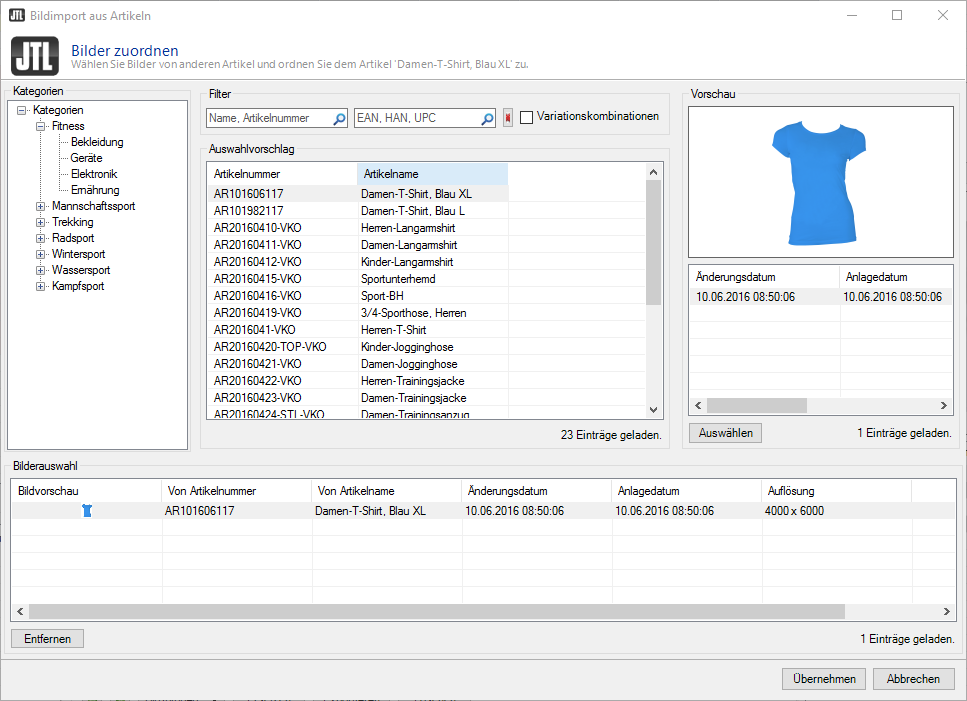
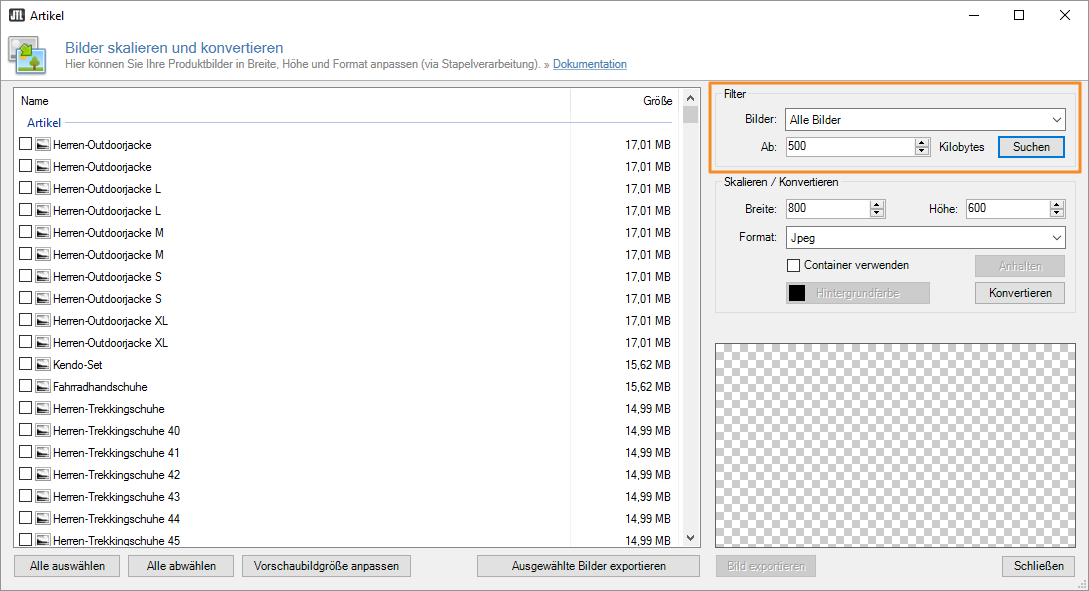
Good product images not only require photography skills, but also organizational skills. With several hundred items, each with different product photos, it’s easy to lose track. Our ERP system JTL-Wawi makes your life easier here too, because you can manage your product images together with other item data in one software. Individual product images can be created for each variation item – for example, if you sell a T-shirt in different colors.
The minimum standards at Amazon
Even if you want to sell on Amazon, you have to deal with your product photos, as retailers are bound by certain guidelines: “Images must be clear, informative and attractive”, is the requirement. In concrete terms, this means that each detail page must contain at least one product image; six photos and one video are recommended. You can read the exact requirements for product images on Amazon Seller Central.
Legal requirements for product images
Retailers are obliged to indicate when accessories are not included in the offer price – otherwise there is a risk of a warning letter. So be careful, for example, if you sell sofas and want to photograph them with additional cushions or blankets that are not included! This item from our partner IT-Recht Kanzlei explains the details. It also explains what copyright and trademark law prescribes if you use product images that you have not taken yourself.
Product presentations of the future
One thing is certain: If you’re serious about your online store, there’s no getting around the topic of product photography – whether it’s the legal details of using third-party photos or the technical intricacies of creating your own product images. But it’s definitely worth the effort!
There are also exciting developments in terms of product presentation that are still dreams of the future today, but could become established in the future: eCommerce providers have been experimenting with augmented reality technologies in recent years. Amazon customers, for example, can use the so-called View in Your Room function to project products into their own living room using a cell phone camera.
We are excited to see what the future holds here!