JTL
Digital, legally compliant &
automated with
e-invoice software
Over 50,000 online retailers rely on JTL software.







How to benefit with JTL's e-invoicing solutions
Legally compliant & future-proof
Create, receive and process invoices 100% compliant with XRechnung, ZUGFeRD & the requirements of the e-invoicing obligation 2025.
Fast invoice processing
Automated invoice import & export in XML format – including mandatory fields, validation and error checking.
Automatic archiving
Invoices are stored in an audit-proof manner – with logging, access protection and full-text search.
DATEV-compatible export
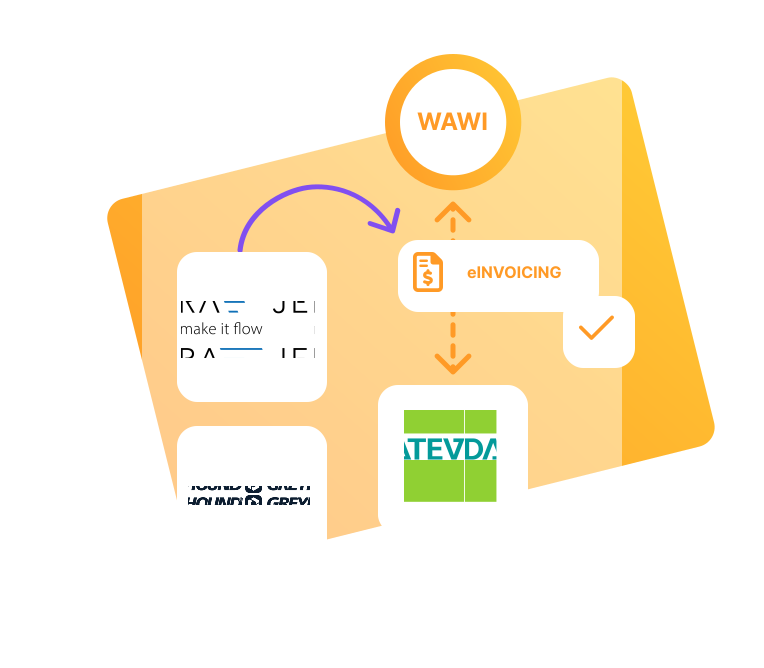
Transfer invoice data including documents to DATEV & tax consultants – complete & without manual rework.

Questions & answers on the subject of e-billing*
The 2025 e-invoicing obligation affects all taxable B2B transactions, provided that the invoicing party and the invoice recipient are based in Germany. This includes small, medium-sized and large companies, regardless of whether they are run as a main or secondary business. Freelancers and small businesses are also subject to the regulation if they invoice other companies for services; even if they are exempt from VAT under Section 19 UStG, they should be technically prepared to receive e-invoices from 2025 if their suppliers or service providers use them from the turn of the year.
From 2025, you as a retailer must be able to issue and receive your invoices for domestic B2B transactions in structured, machine-readable XML format in accordance with the EU DIN 16931 requirements – otherwise they will not be eligible for input tax deduction.
Paperless invoicing is intended to contribute to greater transparency, tamper-proofing and efficiency in accounting and further advance digitalization in Germany. The framework is provided by the Growth Opportunities Act and the EU draft directive “VAT in the Digital Age” (ViDA).
Invoices to private individuals are exempt from the e-invoicing obligation. If you want to convert your entire accounting to e-invoices, you can also issue invoices to private customers in XML format in exceptional cases; however, this is only possible if the respective recipient agrees.
Yes, small-value invoices with amounts under 250 euros and ticket invoices are exempt from the e-invoicing obligation.
The following deadlines apply for the introduction of the e-invoicing obligation:
- It will still be possible to send paper invoices until the end of 2026. However, if you wish to continue sending other electronic invoice formats such as PDFs, you must obtain the consent of the respective recipient.
- From 2027, the obligation to issue e-invoices will apply to companies with a total turnover of more than 800,000 euros in the previous year.
- Smaller companies have an extended transition period until the end of 2027 to adapt their processes accordingly. During this period, they may continue to use paper invoices or other electronic formats, provided the recipient agrees.
- From 2028, the obligation to issue e-invoices will apply without restriction to all companies in the B2B sector, regardless of turnover.
The standards for electronic invoices in Germany are XRechnung and ZUGFeRD. XRechnung consists exclusively of structured XML data, which means that the invoice can be processed directly and automatically. ZUGFeRD is a hybrid format that combines a PDF file with embedded structured XML data; it offers flexibility for various business areas as the invoice is available in a machine-readable format and as a human-readable, visually appealing invoice document.
* The information on this page does not constitute legal or tax advice and cannot replace such advice. If you have any further questions, please contact your lawyer or tax advisor. You can find tax firms specializing in eCommerce in the JTL tax consultant network.