Our developers are currently working hard on an important expansion of the JTL product range with regard to the possibility of selling on online marketplaces. In today’s developer diary, we want to give you an insight into the current status of our work and show you how you can use JTL-SCX in the future to systematically expand your sales channels.
What is JTL-SCX?
JTL-SCX stands for Sales ChannelExtensionand describes our new standardized interface, which should enable you as a customer, but also our service and technology partners, to integrate additional sales channels into JTL-Wawi. One of our most important goals in the development of this interface is to make this integration as generic as possible, i.e. standardized. In short: Whether you connect to marketplace A or B, list a product on marketplace C or import a new order from marketplace D, the work steps will always be identical for you.
Why do we develop our own marketplace interfaces?
JTL-eazyAuction allows you to connect the two major online marketplaces eBay and Amazon with JTL-Wawi. Other marketplaces were previously only possible via the solutions of our partners. With JTL-SCX, however, we not only want to offer you JTL’s own product, but also further expand and strengthen your options in the direction of multichannel commerce.
We at JTL, as well as partners and you as a customer, will be able to integrate any sales channel. This results in many different integrations that you can use in the future.
How does JTL-SCX work?
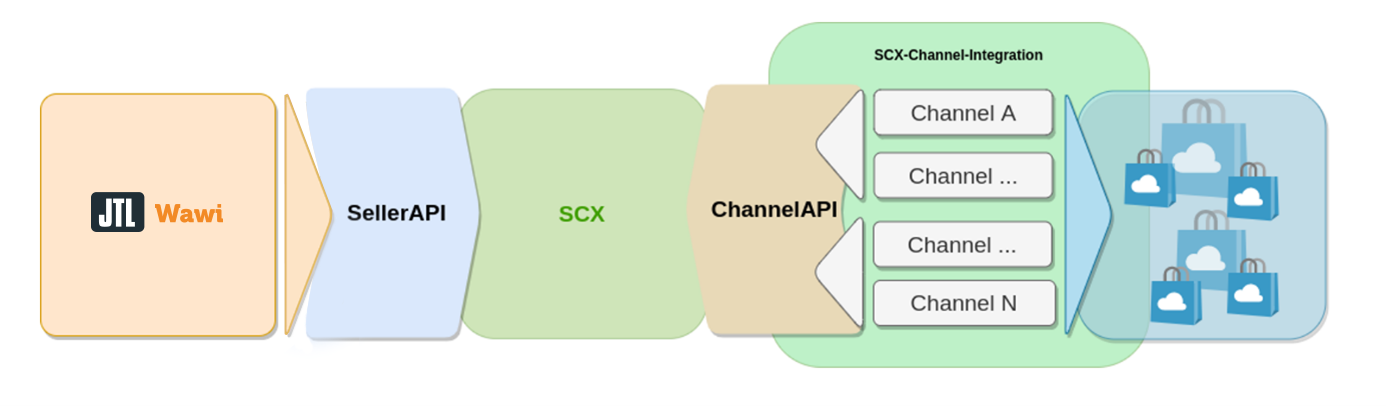
JTL-SCX technically consists of two interfaces: The Seller API and the Channel API. JTL-Wawi communicates with the Seller API. Listings are uploaded or orders are collected via this interface. Of course, many other technical processes run in the background, but we can neglect them here for a general understanding.
The counterpart is the Channel API. With it, we will soon cover a large number of channel integrations. A channel establishes the actual connection to the sales channel and bundles the entire transformation and business logic required, for example, to list a listing on an online marketplace or to retrieve new orders.
You can think of the system that connects Seller API and Channel API as a kind of proxy, i.e. the communication interface in our SCX network. It knows all the merchants that are connected via Seller API and also knows which channel each merchant is working with.
The challenge for our development
For each marketplace, there are rules for you as a trader that must be observed in order to list a listing. These are provided to you in the form of metadata. The wealth of metadata ranges from the category tree to the mandatory item attributes and shipping rules.
The big technical challenge for us as developers is to map and handle the specifications of a marketplace in the channel so that the data flow via the Channel API to the Seller API to JTL-Wawi can be designed uniformly and in the same way for every possible sales channel.
JTL-SCX in interaction with JTL-Wawi
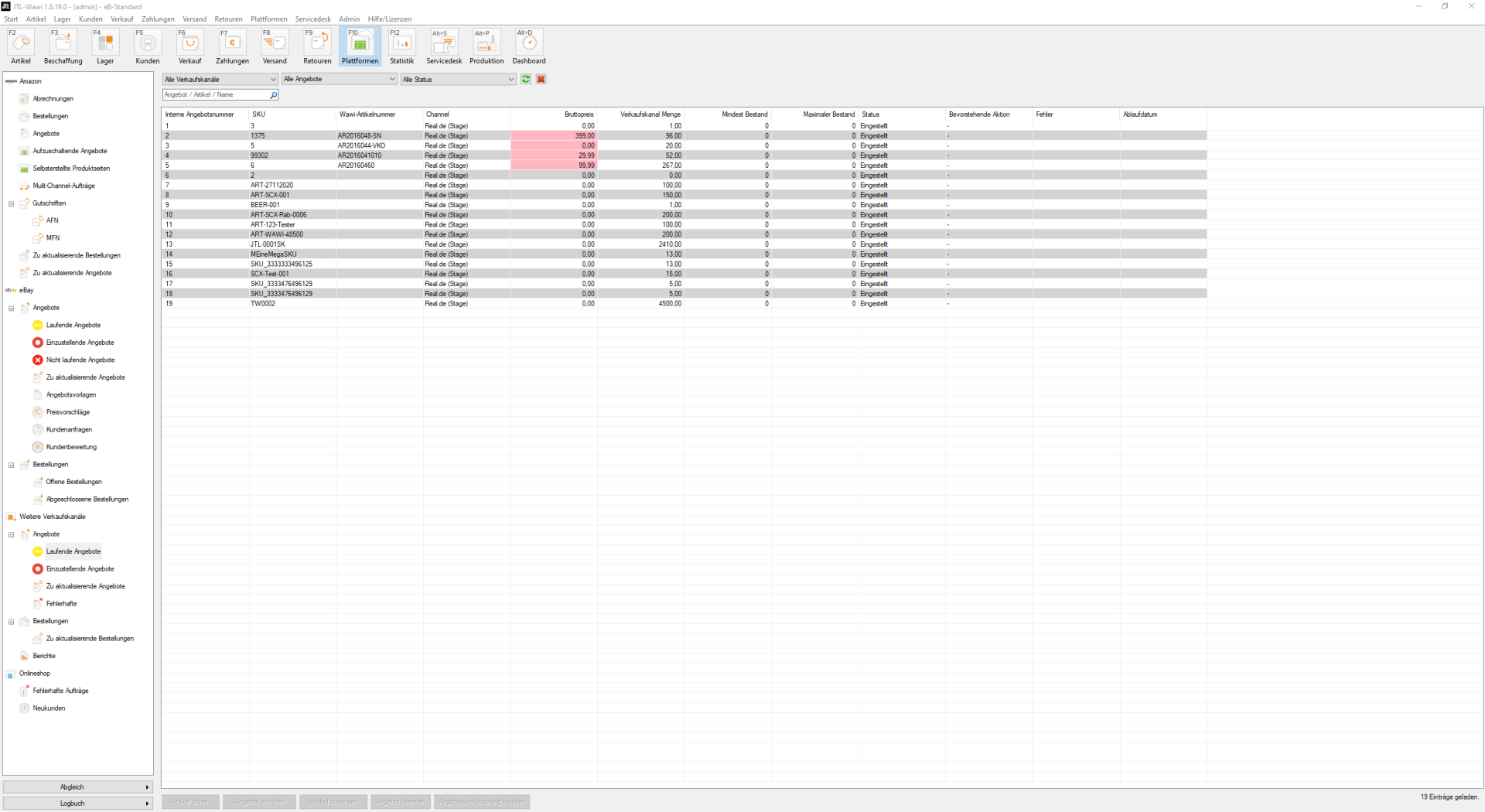
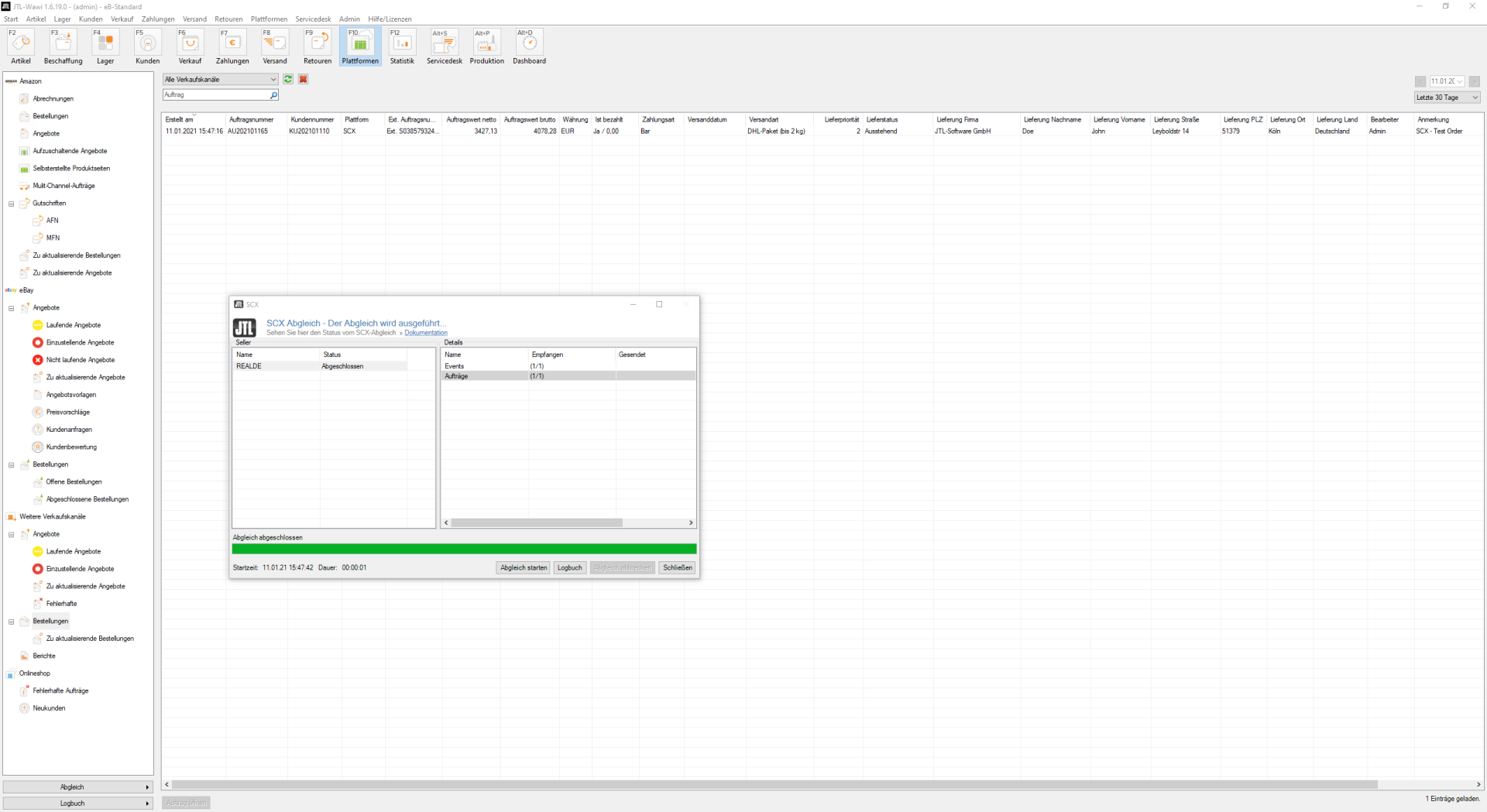
JTL-SCX will be seamlessly implemented in JTL-Wawi as part of JTL-eazyAuction and is expected to be available to you from version 1.6 of our ERP. JTL-SCX will have its own area in the “Platforms” tab. JTL-SCX will then support you in managing your listings, processing orders and the post-order process.
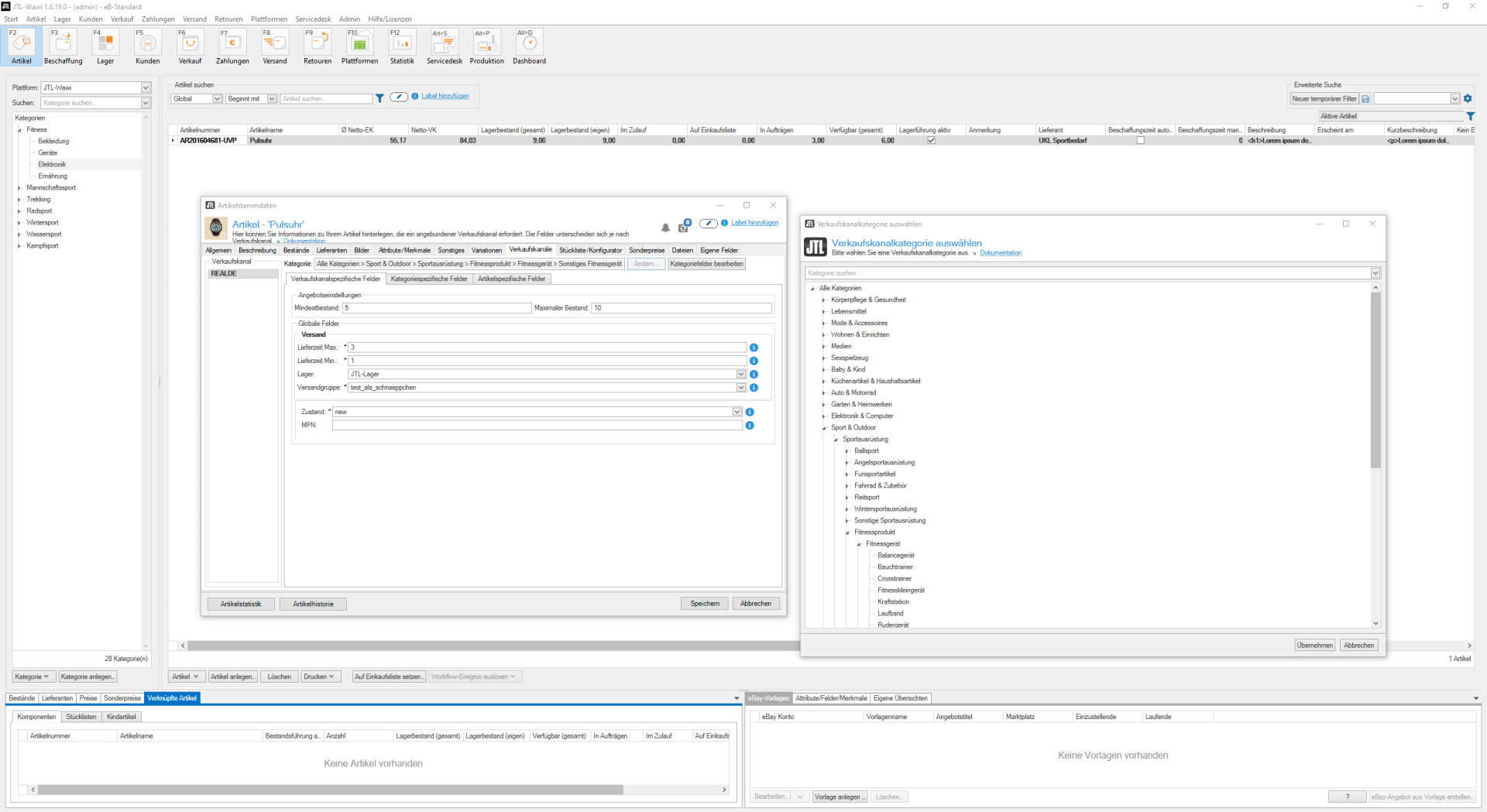
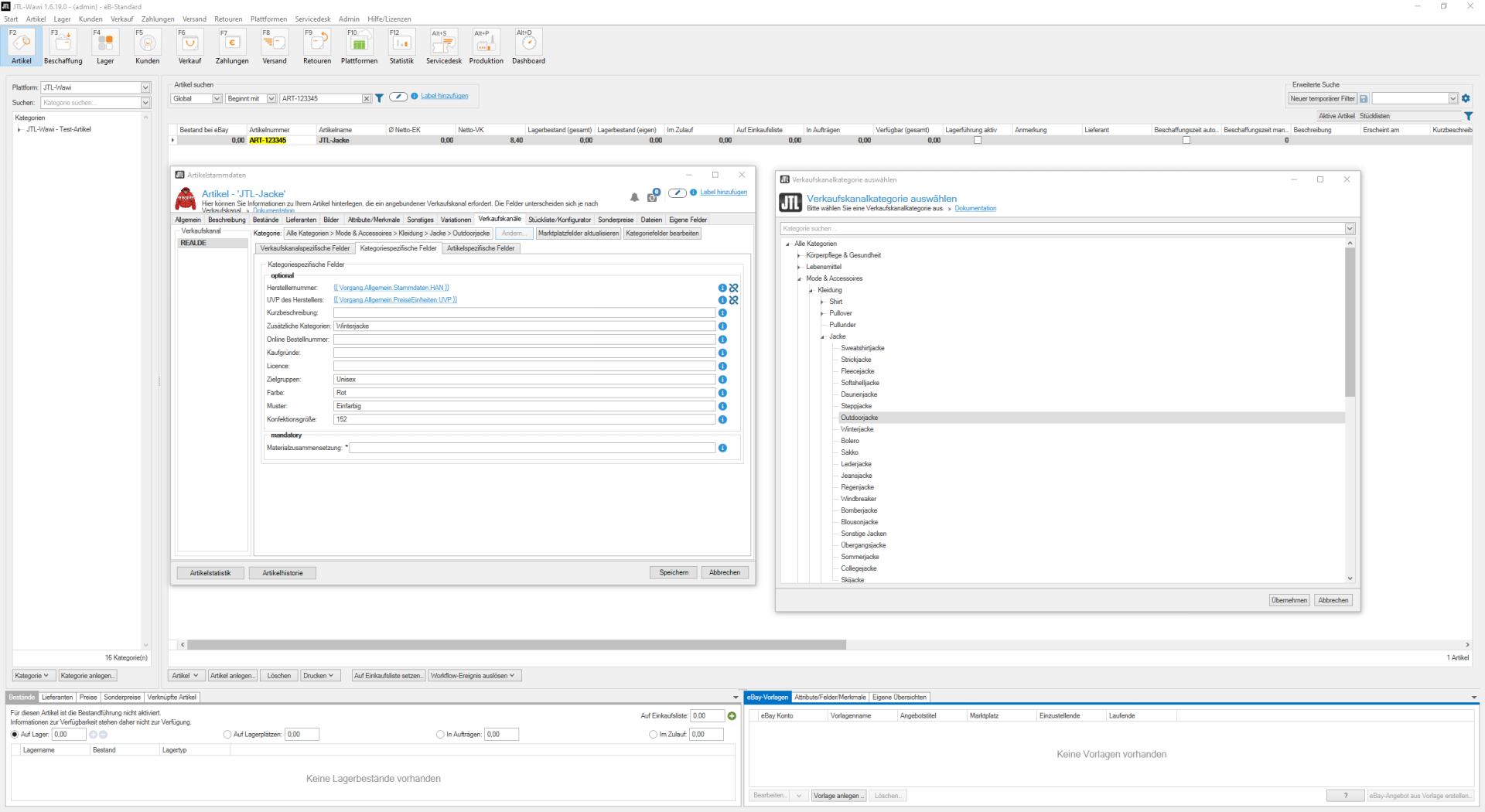
However, you will make all relevant settings for a listing on the online marketplaces in the new “sales channel fields” within the item details.
Where is our development right now?
In order to implement all the functions and additional fields required for the operation of JTL-SCX in JTL-Wawi, extensive conversion work was necessary in our ERP system. In addition, the conception, planning and development of the two API interfaces cost us a lot of work. The following points have been on our to-do list in recent weeks:
Kaufland.de as the first new marketplace in JTL-Wawi
We are pleased that we have already successfully integrated the first marketplace, kaufland.de (formerly real.de), into JTL-SCX and have already been able to process the first internal test purchases here.

Now it’s time for us to subject the interfaces to further practical tests. To this end, we are currently working with selected pilot customers.
Our next steps
Even though we can apply many of the findings of this development to other marketplaces, the first differences between theory and practice became apparent during implementation: we have to keep the JTL-SCX interface generic enough to allow any marketplace to be integrated in the future without implementing marketplace-specific functions in JTL-Wawi. This means that we have to gradually expand our platform with additional functionalities. For example, there are marketplaces where an order must first be explicitly confirmed, i.e. accepted, by JTL-Wawi before it can be processed further. JTL-SCX will be automatically enriched with new basic functions so that the integration of further marketplaces will be easier and faster in the future.
Next, we will implement the post order processes, such as returns and exchanges as well as invoice corrections.
JTL as an open system
We have already set up our JTL-Fulfillment Network as an open system in which fulfillment service providers and retailers can add each other via the Rest API. We also follow this principle with JTL-SCX.
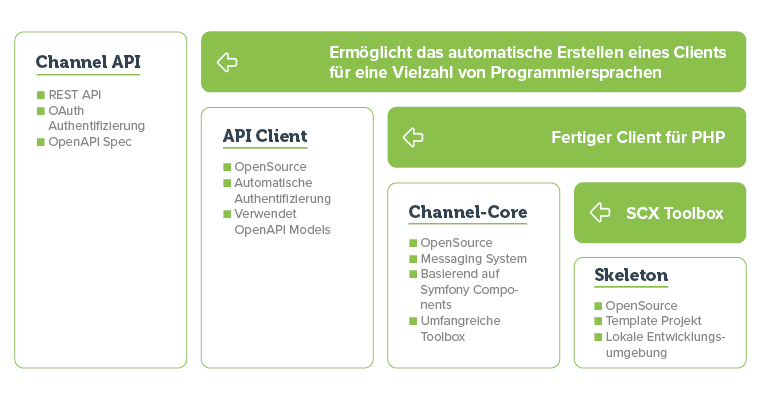
We provide detailed documentation for this. Our API documentation is based entirely on the open OpenAPI Spec standard, allowing you to generate API clients for almost any language at the touch of a button. Our own development tools (based on PHP) are available as open source projects on GitHub.