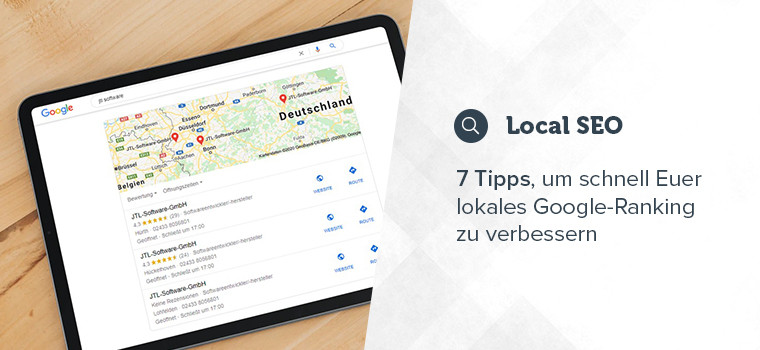
Anyone looking for a store, restaurant or service in their area usually does so online. A prominent position in Google searches is crucial in order to prevail against competitors. But how do you improve your ranking in local Google searches? Local SEO is the magic word here. But what does the term actually mean? And how can you use it to improve your company’s findability? We have compiled 7 tips for you:
What is local SEO?
SEO stands for Search Engine Optimization and refers to search engine optimization for the purpose of improving the findability of your own website on Google, Bing and Co. Local SEO is a sub-area of this search engine optimization with a focus on local or regional search results.
If customers search online for stores, restaurants or services using a location, the results are part of the “local search”. But even without a direct location, Google takes the user’s location into account in order to display the most suitable and relevant results for them.
Why is local SEO important?
To understand why “local search” is so important for customers’ purchasing decisions, it is worth taking a look at the following data from a Google study:
Local Good not only helps you to be found faster and better by potential customers, you also increase your sales opportunities with a prominent listing.
Especially in the current coronavirus crisis, many shoppers are specifically targeting regional retailers to support them. Don’t miss out on this opportunity and bring your company to the forefront with local SEO – and not just in the search results!
7 local SEO measures for a better Google ranking
1) Optimize your NAP data (name, address, telephone number)
NAP data is your name or the name of your company, the address and telephone number. It sounds banal, but this data plays a very important role in local SEO: If your NAP data matches on all online presences, this increases your ranking factor in Google searches.
So check them regularly and stick to official standards when spelling them. For example, the following applies to telephone numbers:
National: Area code [blank] Phone number – 02433 8056801
International: Country code [blank] Area code [blank] Phone number (without leading ‘0’) – +49 2433 8056801

2) Set up a landing page for each of your branches
Each branch needs its own website, which users can access directly via their web search. You should display the following information on each of these pages:
- Location in URL, metadata, headline & body text
- Pictures of the location
- Google Maps
- NAP data
- Contact options
- Description of the location
- Presentation of the team
If you only operate a single store, you can enter this information on any page of your website; this is also possible in the footer.
3) Create a Google My Business entry
Google My Business is a free search engine platform that you can use to manage your online presence (e.g. Google Search or Google Maps). You have the option of uploading images, opening hours and other company data.
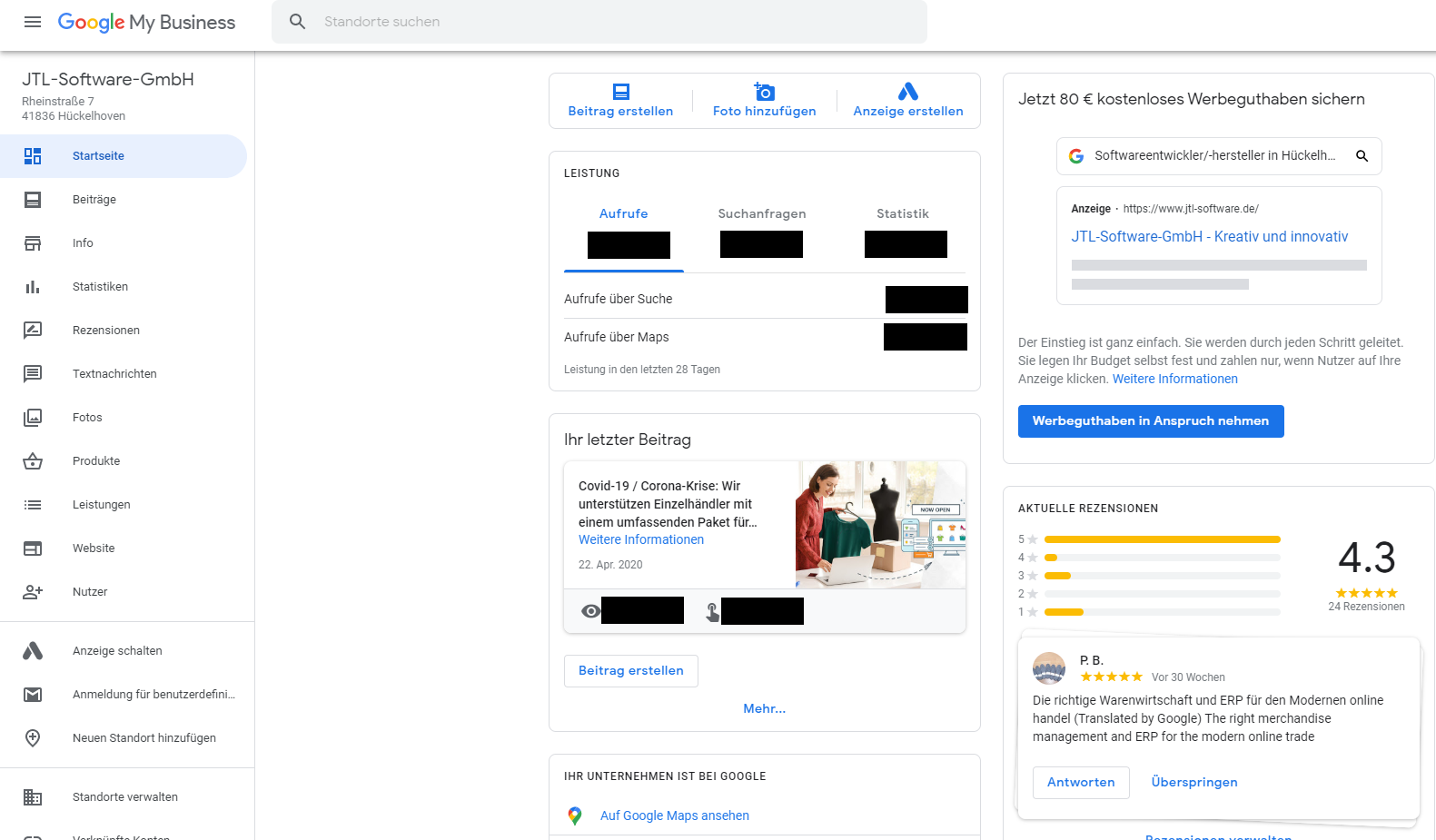
Filling in the data is worthwhile in two ways: not only will your customers be pleased to receive detailed information, but Google will also reward fully completed fields with a higher search ranking!
Also make sure to keep the information you enter up to date: This will help you avoid negative customer reviews because customers are faced with a closed door during your vacation period or when opening hours change.
And that brings us to tip 4:
4) Collect good customer reviews
Positive customer reviews are crucial for local SEO when it comes to improving your ranking quickly. Encourage your customers to leave you a good customer review. Especially in the current crisis, local buyers are very helpful.
Have you received a negative customer review? That doesn’t have to be the end of the world! Respond to the feedback in a friendly and constructive manner. This shows other customers that you are willing to solve problems.
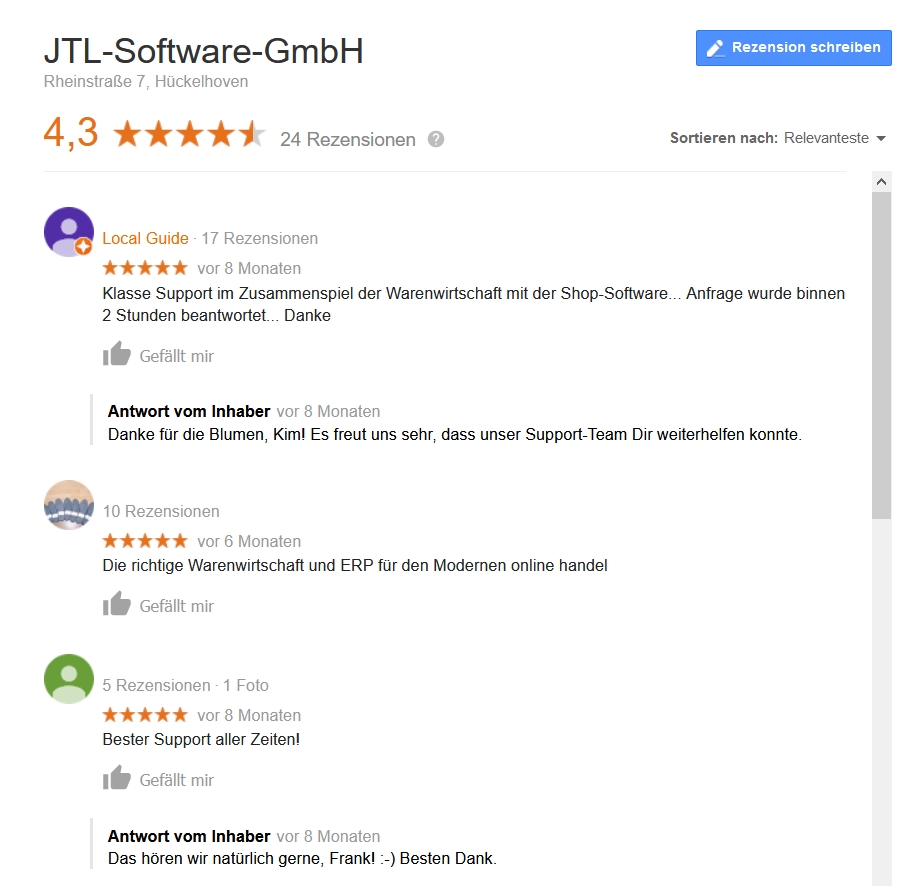
Don’t forget the customer reviews on social networks. They also have an influence on your ranking!
Please also note our tip 5:
5) Use the social networks
Potential customers are not only gathering information via search engines, but also increasingly via social media. It is therefore worth being regularly active in the networks with posts, images, videos, etc. Correct NAP data or a fast response time to inquiries also make a professional impression on users.
Our tip:
You don’t have to use all social media channels to be successful. Choose the portals that best suit your company and your target group and regularly post high-quality content there. This looks more professional than numerous unkempt profiles.
6) Uses local citations
Local Citations are entries of your company (and the corresponding NAP data) on local web directories such as GelbeSeiten.de or meineStadt.de.
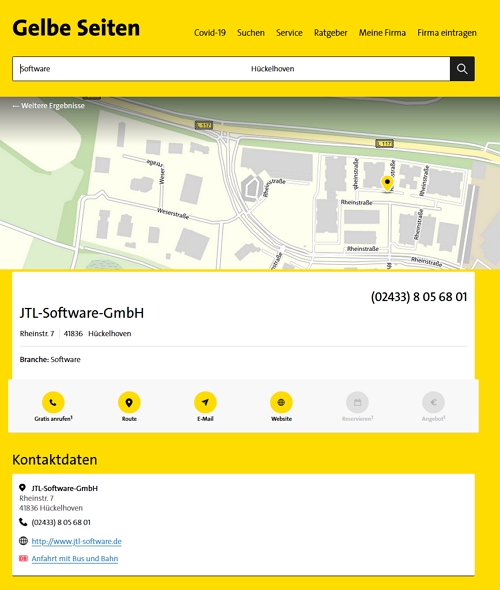
Google uses them as an important resource for its own search data: the more often a company appears in such directories with the same name, address and telephone number, the more confirmation the search engine receives that it is a real and active business, which immediately improves your ranking.
So choose the relevant local directories and maintain your data there!
7) Stores structured data
Structured data is something of a “hidden treasure” in the field of local SEO, as this data is not visible in the front end of your website. However, it is all the more important for Google: the search engine uses the structured data to crawl your website and further optimize the search engine results pages (SERPs) based on a user’s search query.
You should therefore be sure to maintain the structured data: Add it to your site in the ‘schema.org’ format for Local Business. The easiest way to do this is via a schema generator.
Select Local Business and fill in the fields. Add the generated script to your website – if you have several branches, each branch page will have its own structured data.
We hope that our tips for improving your local SEO measures have helped you and wish you lots of fun and success with their implementation!