Sneak peek before the stable release: new marketplaces in JTL-Wawi 1.8
The stable version of JTL-Wawi 1.8 is in the starting blocks. It will be available for download from November 7, 2023. Among other things, the ERP has new features for purchase order proposals and JTL-Workflows. However, the biggest highlight is undoubtedly the integration of new marketplaces in JTL-eazyAuction – including Kaufland (Germany, Czech Republic, Slovakia), Otto.de, voelkner and MediaMarktSaturn. In this interview, developer Ronny tells us what retailers can expect in the future.
07.11.23: Stable Release JTL-Wawi 1.8
JTL: Hello Ronny! Please tell us briefly what will change with the stable release of JTL-Wawi 1.8 regarding JTL-eazyAuction.
Ronny: The biggest change is that new marketplace connections to Kaufland (Germany, Czech Republic, Slovakia), Otto.de, voelkner and MediaMarktSaturn have now been added. These were previously available in open beta status and are now becoming stable. The SCX(SalesChannelExtension) interface will also be available with the release, allowing partners to independently integrate marketplaces and make them available to their customers. Some “Quality of Life” improvements will also be added. For example, the new version makes maintaining article data for marketplaces much more convenient. Retailers can now find their way around the system more easily and configure items more quickly. We have also tackled the whole issue of licenses: From the stable release onwards, merchants must book licenses for marketplace connections in the JTL-Customer Centre and can manage them independently. This complete self-service was not possible before.
License reconciliation now requires a link to the JTL-Customer Centre
The use of licensed products requires a license comparison. As of JTL-Wawi 1.8.7.3, this reconciliation no longer works via the original JTL-Wawi license key. Therefore, it is now necessary to authorize JTL-Wawi to access the license information in your JTL customer account. If you use JTL-Wawi with products or modules that require a license, you must connect them to your JTL-Customer Centre for the first time or again as part of the JTL-Wawi update. You will need your access data for the JTL-Customer Centre (company login).
Please check exactly in which JTL customer account your licenses are located in order to connect your JTL-Wawi to the correct customer account. It is not possible to use a JTL customer account with more than one JTL-Wawi database (client). You need a separate JTL customer account for each client.
JTL: In your opinion, what are the biggest advantages that JTL-eazyAuction offers with the release?
Ronny: The biggest advantage is that with all marketplace connections, the retailer only has to follow one process in JTL-Wawi to prepare their items for the marketplaces or to import and process orders from the marketplaces. This means that new marketplaces can now also be made available for JTL-Wawi quite easily. In the future, it will no longer be necessary to install a new version of JTL-Wawi in order to operate additional marketplace interfaces.
Another advantage is, of course, the new SCX interface itself, which we provide for marketplaces and partners. This now makes it possible to integrate independently into the world of JTL. We are already working with marketplace operators, who in turn are working on being available in JTL-Wawi soon. These will then also be ready for use in JTL-Wawi for all merchants with a JTL-eazyAuction plan and can be used in exactly the same way as Kaufland, Otto and all other new marketplaces.
JTL: What criteria do you use to select the marketplaces to be integrated?
Ronny: We focus entirely on the demand from retailers and our users. We start with the big players in the German market in order to offer the best and most attractive sales opportunities. Then there are JTL service partners who build interfaces on behalf of customers. In other words, a retailer comes along and says “Hey, I’d like to sell on marketplace xy, can you make that possible for me in the JTL systems?” And these service and technology partners then build an interface on behalf of the retailer, which they then provide. This mainly concerns niche marketplaces that offer a very specific product range.
JTL: When did you start developing the new features and what hurdles did you have to overcome?
Ronny: I think the idea was born in 2018/19, it was a big topic at a JTL Inside. That’s when the topic of licenses came into play. The big wish from merchants was that they should be able to cancel their marketplace accounts themselves instead of having to go through support. We then put a lot of extra development work into this so that it runs smoothly. And for us in the eazyAuction team, this had the advantage that we were able to round off the existing marketplaces. We had to get to know and understand every marketplace that we integrated, including all its peculiarities, in order to build the interface in this way.
JTL: What different requirements had to be taken into account?
Ronny: The main challenge was that, from a technical point of view, each marketplace cooks its own soup, i.e. has its own processes and rules. In JTL-Wawi, the marketplaces (with the exception of Amazon and eBay) now function identically at their core. The work steps for the creation of listings and order processing no longer differ within the marketplaces.
With the new marketplace connections, there really should be a standardized process for the retailer. Once they have understood this, they can list on any marketplace.
JTL: What did you attach particular importance to during development?
Ronny: That we don’t implement any special curls. That was very important. With the new marketplace connections, there really should be a standardized process for the retailer. Once they have understood this, they can list on any marketplace.
JTL: Will individual tools or functions only be available for very specific marketplaces?
Ronny: Yes and no. The new interface is not ready with JTL-Wawi 1.8. The entire development path that we have followed so far has always meant that we have enabled individual processes in our interface that are currently only required by one marketplace. One example is Otto. This marketplace requires the returns label to be specified directly when setting the shipping method. They are currently the only one. But we have managed to implement the whole thing in such a way that theoretically every other connected marketplace could make use of it. This means that when new functionalities are developed, it may be that a marketplace has special requirements and we consider this to be so important that we make it available as a general feature.
Another good example: The JTL Amazon Lister, which is still a separate tool in JTL-Wawi today, is currently still in the closed beta phase. After the stable release of 1.8, we will put a stronger focus on it in order to make it available as quickly as possible.
Why is marketplace selling so important for the overall profit of your trade?
JTL: What challenges do merchants have to overcome these days if they want to sell on marketplaces? How will the new features in JTL-eazyAuction help to manage these challenges?
Ronny: The market is growing very quickly. Many web stores are expanding into marketplaces and there are countless opportunities for retailers to open up new sales channels. The challenge is to keep an eye on the market, keep pace and not miss any opportunities. Each marketplace has its own rules that it applies in order for a retailer to be able to sell there at all. We bundle this together as much as possible through our new interface and now offer the opportunity to expand very quickly to all the different marketplaces.
JTL: What advantages does JTL-eazyAuction have over other ERP marketplace connections?
Ronny: JTL-eazyAuction integrates perfectly into the entire JTL ecosystem. In addition, the barrier to entry is very low. It doesn’t cost much to simply try it out and then grow with JTL. This means that a new marketplace connection can be set up in just a few minutes. And if you want to expand, there are many services and tools that allow merchants to grow and still scale.
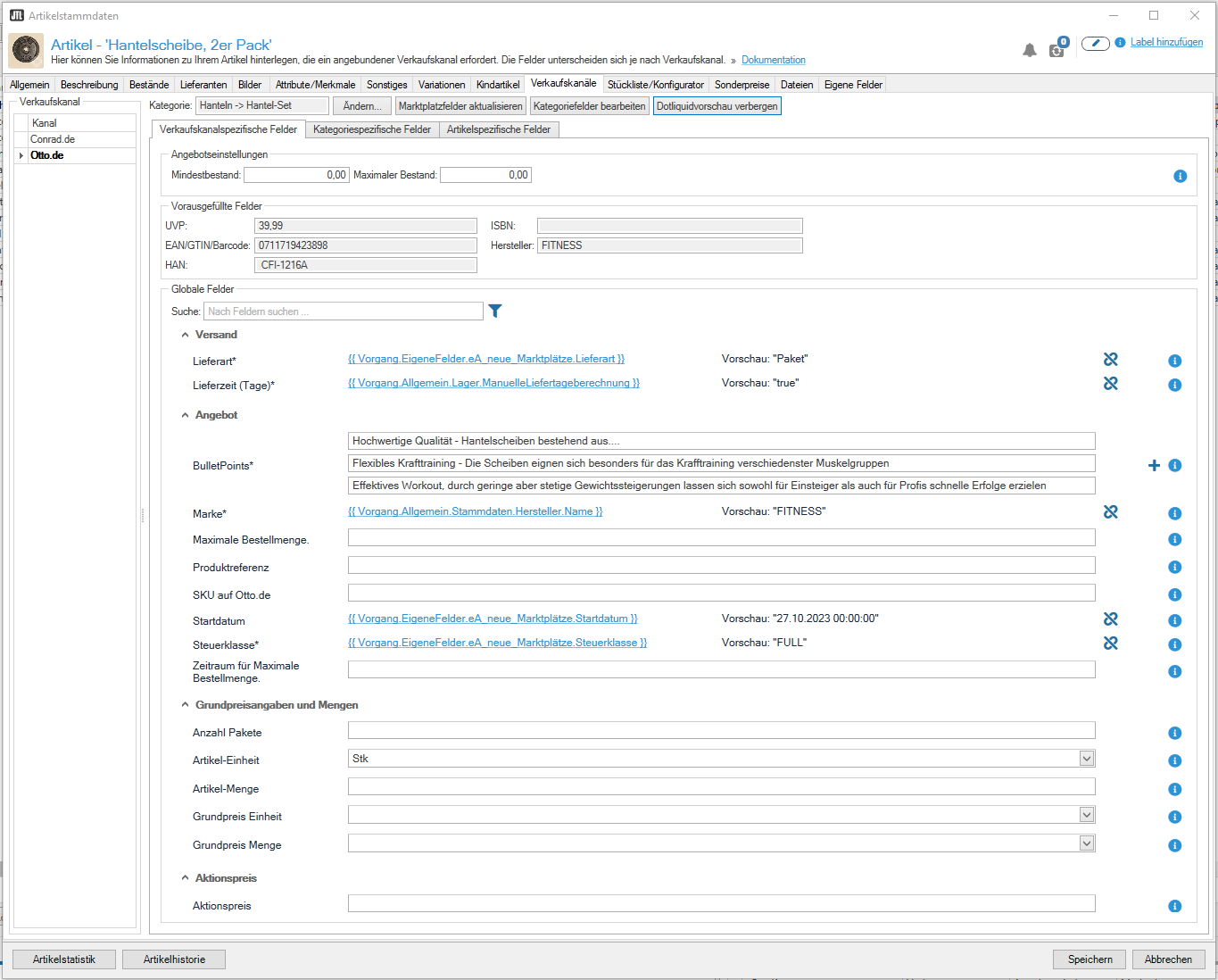
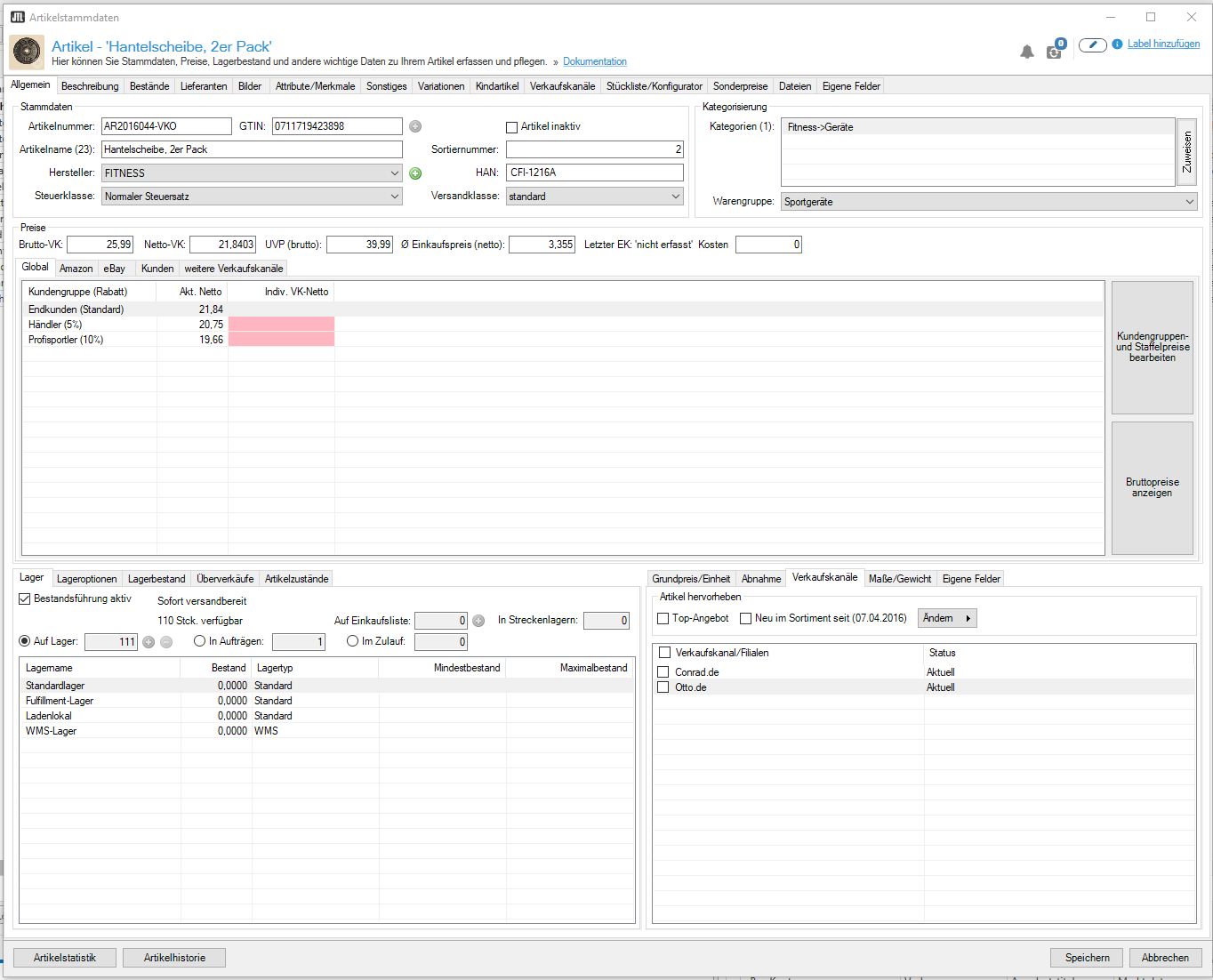
Eure Verkaufskanäle könnt Ihr nun einheitlich in den Artikelstammdaten verwalten
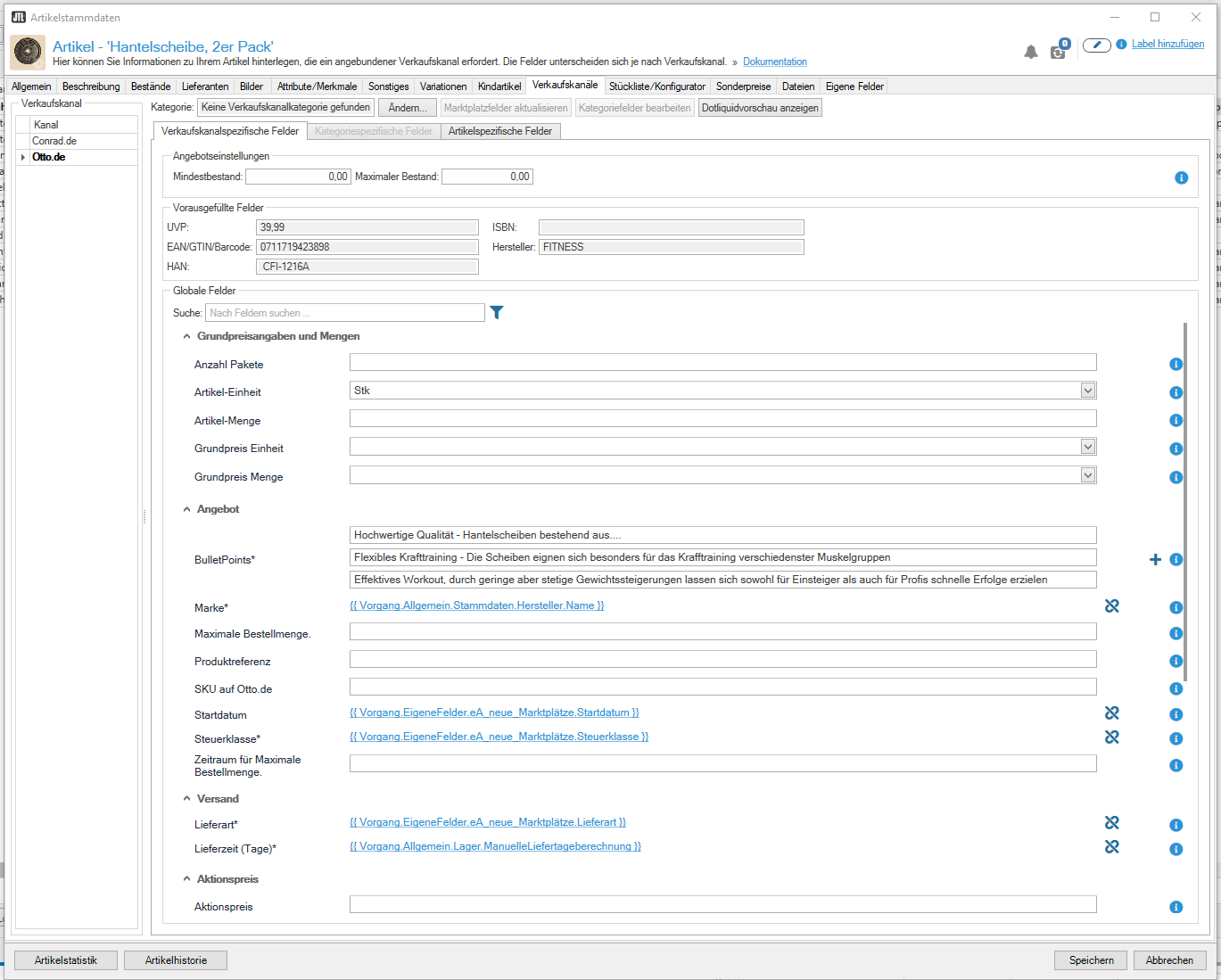
Eure Verkaufskanäle könnt Ihr nun einheitlich in den Artikelstammdaten verwalten
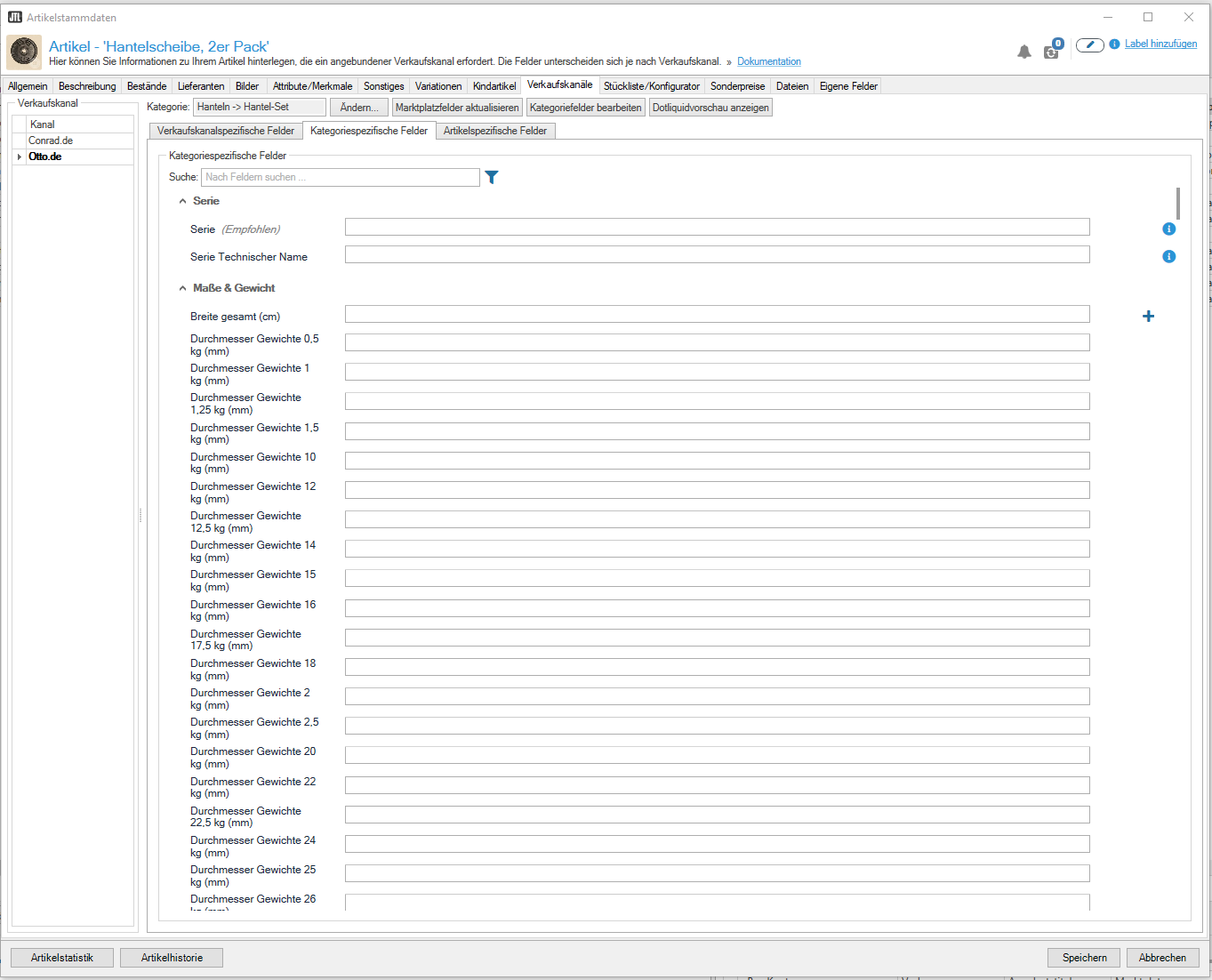
Eure Verkaufskanäle könnt Ihr nun einheitlich in den Artikelstammdaten verwalten
Eure Verkaufskanäle könnt Ihr nun einheitlich in den Artikelstammdaten verwalten
JTL: Surely there are already further plans that you want to realize with regard to JTL-eazyAuction. Can you tell us what you will be working on next?
Ronny: There will be more marketplaces coming, we are already working on some, such as Check24 and Cdiscount, which are already available as closed beta. Others are already in the starting blocks. In addition, there are marketplaces such as Hood that can be integrated independently. Following the release of JTL-Wawi 1.8, work is underway to ensure that partners who create their own integrations can also market them independently. There will also be an integration of all marketplaces into the JTL-Extension Store, so that merchants can “click on” the marketplace integration in JTL-Wawi from other providers and then sell on more exotic markets or niche marketplaces.
A new marketplace connection can be set up in just a few minutes. And if you want to expand, there are many services and tools that enable retailers to grow and still scale.
JTL: Finally, would you like to say something about the project?
Ronny: I would like to say a big thank you to everyone involved in the project! A huge amount of teamwork was needed to realize all of this. Together with our pilot customers, partners and colleagues from support and development, we have created something great. There were a lot of people involved, both internally at JTL and externally, who did a great job.