The obligation to use a certified technical security device (TSE) is the most significant innovation that the KassenSichV provides for cash register operators from January 1, 2020. Despite the “non-objection rule” that now applies until 30.9.2020, retailers are called upon to upgrade their checkout systems immediately. In today’s second part of our blog series, we are therefore focusing exclusively on this topic: What is a TSE, what variants will there be and where can I get them? And last but not least: Which solutions do we rely on with our POS software JTL-POS?
We would like to expressly point out that our information does not constitute legal or tax advice, nor can it replace such advice. If you have any further questions, please contact your lawyer or tax advisor.
What is a certified Technical Safety Equipment (TSE)?
A TSE for POS systems consists of three parts:
The Federal Office for Information Security (BSI) is responsible for certifying the TSE. Currently, no TSE manufacturer has completed the entire certification process, which means that no TSE is officially available at the moment. This circumstance in particular has led to the “no objection rule” being officially announced a few days ago until September 30, 2020. Nevertheless, some manufacturers have announced the release of their TSEs before the end of this year.
The “no objection rule” until 30.09.2020
As a large part of the certification processes at the Federal Office for Information Security (BSI) have not yet been completed and it would not have been possible to equip the approximately 2.1 million cash registers in Germany with TSEs by January 1, the federal and state tax authorities have agreed on a so-called non-implementation regulation with effect until September 30, 2020. This means that all cash register operators now have 10 months longer to decide on a suitable security device (TSE) without being prosecuted by the tax authorities
What data is recorded by the TSE?
The data is recorded immediately during the transaction. For example, as soon as an item is receipted or an invoice is created, the TSE logs and saves the respective cash register entries. In accordance with KassenSichV, the following data is recorded in a tamper-proof manner:

What variants of a TSE will there be in the future?
The legislator does not specify a particular system for the quality of the TSE – only a uniform technical test standard and the need for certification by the BSI are defined.
Accordingly, manufacturers are pursuing different approaches to meet the requirements for security devices on POS systems. Further solutions are expected in the coming months. Three variants currently play an important role in certification:
Properties and advantages of the respective TSE variants
Basically, we can distinguish between offline and online TSEs. Offline variants, which do not require an internet connection, include hardware modules such as a USB stick/dongle for a tablet/cash register or a microSD card already integrated by the manufacturer, e.g. in a receipt printer.
Online TSEs, on the other hand, require a permanent and preferably high-performance internet connection. With this solution, the checkout data is encrypted and transferred to the provider’s external cloud server, where it is signed and a corresponding identifier is transferred back to the checkout. The data is stored on the server. If the internet connection is interrupted, the checkout can continue to be used if the data is logged accordingly. JTL-POS already fulfills this requirement.
Hardware TSE: Small retailers in particular benefit!
The TSE module is a particularly recommendable solution for small businesses with only one cash register. If the point of sale system has not yet been online and you want to use the cash register independently of the network at markets, trade fairs and in external sales, the TSE can be used via microSD or USB dongle:
In addition, the hardware module runs under all common operating systems, offers secure crypto functions and usually has sufficient storage space for several years of use. A cloud solution including technical coordination with just one or a few cash registers does not appear to be very efficient here. There is no alternative to the hardware solution if the internet connection is poor or non-existent.
The advantages of the hardware solution also outweigh the cloud solution when operating several cash registers in a network and at one location. Although it has not yet been officially confirmed, it is very likely that not every checkout has to be equipped with its own module, i.e. its own TSE. Rather, it is conceivable that there will be a main checkout with a module and corresponding client checkouts that control and write to the same TSE. An additional network device may be required for this, but the cost of this should be lower than the cost of one or even several TSE modules.
Special case: TSE in the Epson receipt printer
The manufacturer Epson has therefore chosen a different approach and has already successfully established itself in many European countries. It is aimed at businesses that use several cash registers in the same network, but only one central printer for issuing receipts. The TSE is integrated into the receipt printer or can be connected as an upgrade kit via a USB interface. For small to medium-sized businesses that work with several tablet cash registers and a central receipt output, this is an interesting and probably also cost-effective way to meet the requirements for fiscalization.
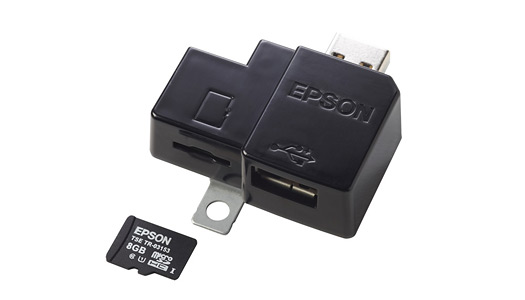
Cloud TSE: Large (branch) companies with a central infrastructure benefit!
The cloud solution is aimed more at companies whose checkout systems are already online and have a large number of checkouts or even branches. These include large retail chains, supermarkets, petrol stations and even system catering outlets. The key advantage of the cloud is that companies are spared the time-consuming and expensive process of converting individual checkouts. New cash registers or entire branches are simply integrated into the Fiskal cloud via a web service, whose TSE memory is also inexhaustible and makes replacement unnecessary, as is the case with hardware solutions.
Which variants does JTL use?
Our POS software JTL-POS should open up all paths to legally compliant fiscalization in the long term. This means that we want to offer our customers both the hardware variants presented and the cloud variant as a fiscalization solution.
Currently, JTL-POS already works effortlessly with a TSE as a USB dongle and the printer TSE from EPSON. Our tests are running very successfully. We are looking forward to the official go-ahead from the BSI so that we can present JTL-POS with its first certified TSE in the near future.
When will the certifications be completed?
Unfortunately, it is not yet possible to make any reliable statements. Although various TSE manufacturers and providers have announced that they will launch their TSE products on the market this quarter, i.e. by the end of the year, no specific dates are yet known. The BSI, as the certificate issuer, is also keeping quiet – so we will have to wait for the official announcement.
Where are the TSEs for JTL-POS available?
As soon as the BSI and the manufacturers give the green light for the use of their TSE, we will immediately offer you the corresponding TSE variants in the JTL-Store. We currently assume that this will be the new fiscal printer and an upgrade kit from Epson as well as a hardware TSE as a USB dongle. We will inform you immediately.